
 Kia Sorento: Variable Force Solenoid (VFS) Description and Operation
Kia Sorento (MQ4, 2021-2026) Service Manual / Engine Control / Fuel System / Engine Control System / Variable Force Solenoid (VFS) Description and Operation
| Description |
| • |
Continuous Variable Valve Timing (CVVT) system advances or retards the valve timing of the intake and
exhaust valve in accordance with the Engine Control Module (ECM) control signal which is calculated by the
engine speed and load.
|
| • |
By controlling CVVT, the valve over-lap or under-lap occurs, which makes better fuel economy and reduces
exhaust gases (NOx, HC) and improves engine performance through reduction of pumping loss, internal Exhaust
Gas Recirculation (EGR) effect, improvement of combustion stability, improvement of volumetric efficiency, and
increase of expansion work.
|
| • |
This system consist of the Variable Force Solenoid (VFS) which supplies the engine oil to the cam phaser or
cuts the engine oil from the cam phaser in accordance with the ECM Pulse With Modulation (PWM) control signal,
the cam phaser which varies the cam phase by using the hydraulic force of the engine oil.
|
| • |
VFS [intake] changes its force depending on the PWM duty to control the stroke of the CVVT Oil Control
Valve (OCV) [intake] bolt.
|
| • |
The delivered oil rotates the rotor connected to the camshaft of the cam pager and rotates the camshaft to
the engine rotating direction (intake advanced / exhaust retarded) or the opposite direction (intake retarded
/ exhaust advanced) to change the phase angle of the cam.
|
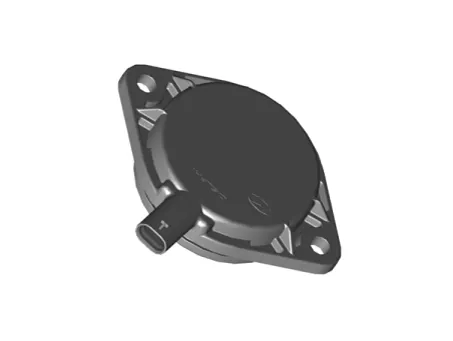
Variable Force Solenoid (VFS) Specifications
Specification
Item
Specification
Coil resistance (...
 Variable Force Solenoid (VFS) Specifications. Variable Force Solenoid (VFS) Components and Components Location
On Vehicle Inspection
1.
The engine control system can be more quickly diagnosed for problems with the KDS. (Refer to "DTC
guide")
...
 Variable Force Solenoid (VFS) On Vehicle Inspection
See also:
Battery Description and Operation
Description
Battery Label Information
1.
Battery Type
- AGM : Absorbent Glass Material
...
Alternator Removal
1.
Disconnect the battery negative terminal.
2.
Disconnect the air compressor connector (A) and the alternator
connector (B), and remove th ...
Engine And Transaxle Assembly Repair procedures
Removal and Installation
...
Manuals list
- Kia Sorento MQ4 2021-2026 Owners Manual
- Kia Sorento XM 2011-2015 Owners Manual
- Kia Sorento XM 2011-2015 Service Manual

Copyright © www.ksmanual.com 2014-2026 - 0.0797