
 Kia Sorento: CVVT & Camshaft Description and Operation
Kia Sorento (MQ4, 2021-2026) Service Manual / Engine Mechanical System / Cylinder Head Assembly / CVVT & Camshaft Description and Operation
| Description |
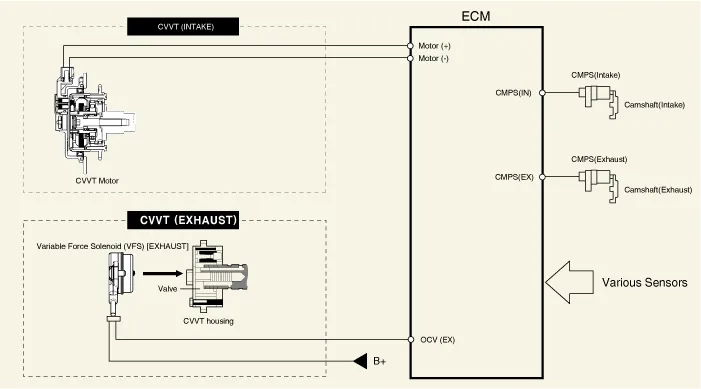
Continuous Variable Valve Timing (CVVT) system advances or retards the valve timing of the intake and exhaust valve
in accordance with the ECM control signal which is calculated by the engine speed and load.By controlling CVVT, the
valve over-lap or under-lap occurs, which increases fuel economy and reduces exhaust gases (NOx, HC) and improves
engine performance through reduction of pumping loss, internal EGR effect, improvement of combustion stability,
improvement of volumetric efficiency, and increase of expansion work.
| [Intake] |
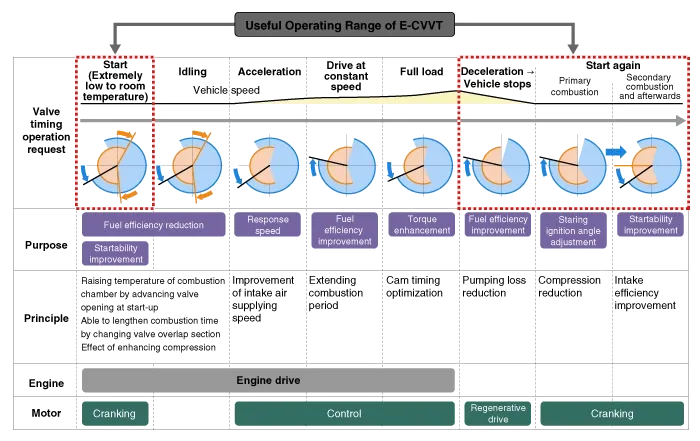
Electric E-CVVT system is electric continuous variable valve timing system. It is located on the intake camshaft of
the engine and uses motor rotation to control the rotation angle of camshaft relative to the rotation of crankshaft
regardless of engine pressure. E-CVVT controls the DC motor current (duty signal) to more closely control the system
compared to the previous pressure type, to increase reaction speed of cam, to improve startability, and to reduce the
emission of exhaust gas. Also, operation range of intake valve (valve opening angle) is expanded. So, the output and
fuel efficiency are improved.
| [Exhaust] |
This system consist of the CVVT Oil Control Valve (OCV) which supplies the engine oil to the cam phaser or runs out
the engine oil from the cam phaser in accordance with the ECM PWM (Pulse With Modulation) control signal which
measures the engine oil temperature, and the Cam Phaser which varies the cam phase by using the hydraulic force of the
engine oil. The engine oil getting out of the CVVT oil control valve varies the cam phase in the direction (Intake
Advance/Exhaust Retard) or opposite direction (Intake Retard/Exhaust Advance) of the engine rotation by rotating the
rotor connected with the camshaft inside the cam phaser.
| Operation Principle |
| [Intake] |
| [Exhaust] |
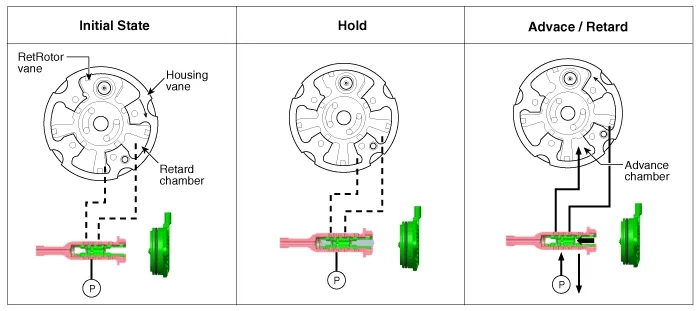
The CVVT has the mechanism rotating the rotor vane with hydraulic force generated by the engine oil supplied to the
advance or retard chamber in accordance with the CVVT oil control valve control.
| [CVVT System Mode] |
|
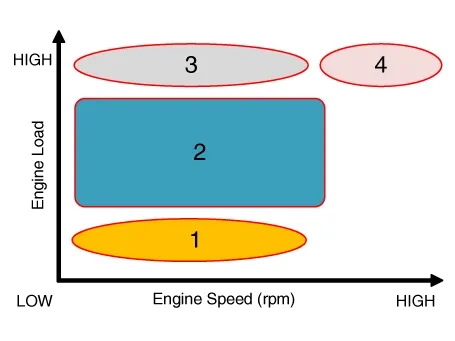
(1) Low Speed / Low Load |
(2) Part Load |
|
|
|
|
(3) Low Speed / High Load |
(4) High Speed / High Load |
|
|
|
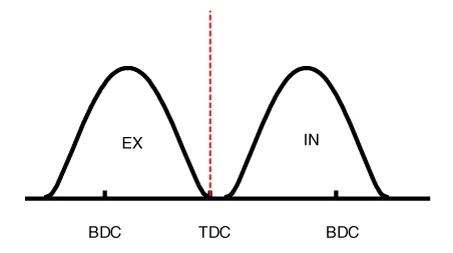
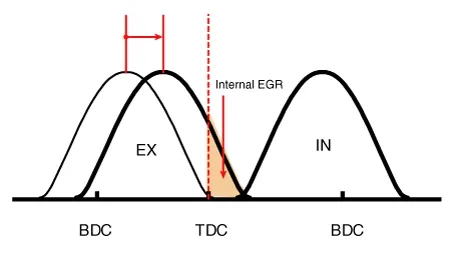
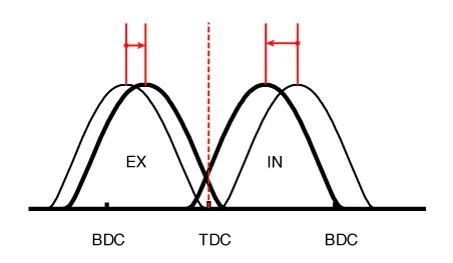
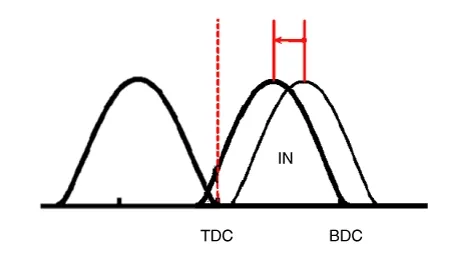
| Driving Condition |
Exhaust Valve |
Intake Valve |
||
| Valve Timing |
Effect |
Valve Timing |
Effect |
|
| (1) Low Speed/Low Load |
Completely Advance |
* Valve Under-lap |
Completely Retard |
* Valve Under-lap |
| * Improvement of combustion stability |
* Improvement of combustion stability |
|||
| (2) Part Load |
Retard |
* Increase of expansion work |
Retard |
* Reduction of pumping loss |
| * Reduction of pumping loss |
||||
| * Reduction of HC |
||||
| (3) Low Speed/High Load |
Retard |
* Increase of expansion work |
Advance |
* Prevention of intake back flow (Improvement of volumetric efficiency) |
| (4) High Speed/High Load |
Advance |
* Reduction of pumping loss |
Retard |
* Improvement of volumetric efficiency |
Removal
...
 Cylinder Head Cover Repair procedures
Removal
CVVT and Camshaft
1.
Remove the timing chain.
(Refer to Timing System - "Timing Chain")
...
 CVVT & Camshaft Repair procedures
See also:
Removal
1.
Turn the ignition switch OFF and disconnect the battery negative
(-) cable.
2.
Disconnect the engine coolant temperature sensor connecto ...
Battery Specifications
Specification
Item
Specification
Model type
AGM70L-DIN
...
Auto Head lamp leveling Unit Operation
Operating Procedure
1.
Suspension angle change resulted from vehicle's load change.
2.
Height sensor signal change
...
Manuals list
- Kia Sorento MQ4 2021-2026 Owners Manual
- Kia Sorento XM 2011-2015 Owners Manual
- Kia Sorento XM 2011-2015 Service Manual

Copyright © www.ksmanual.com 2014-2026 - 0.0584