
 Kia Sorento: Vehicle load limit
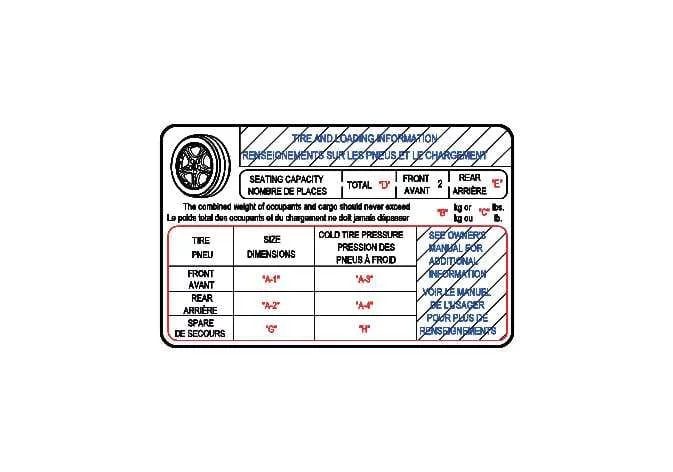
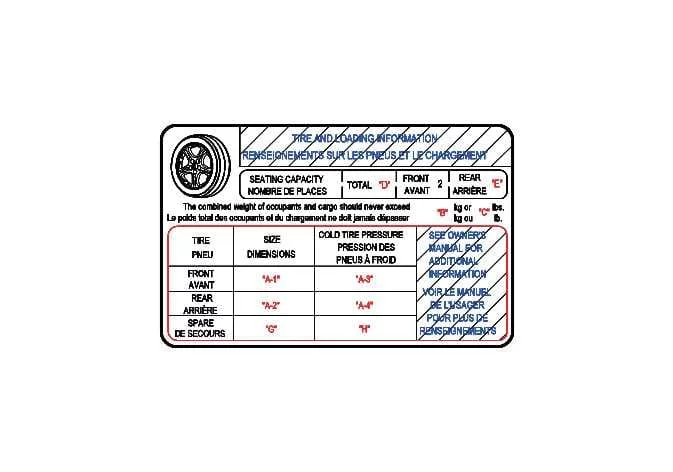
The official tire and loading information label affixed to the driver's side door frame explicitly displays your specific Kia Sorento load limits.
Tire and loading information label
The certification label located on the driver-side door sill lists original equipment tire dimensions, recommended cold inflation pressures, maximum passenger seating capacity, and total vehicle capacity weight.
|
Vehicle capacity weight:
-
6 seats: 1,032 lb (468 kg)
-
7 seats: 1,204 lb (546 kg)
Vehicle capacity weight represents the absolute maximum combined mass of all occupants and cargo combined. When your Kia Sorento is coupled with a trailer, this combined weight calculation must also incorporate the downward trailer tongue load.
Seating capacity total: 6 or 7 persons (front seat: 2 persons; rear seat: 4 or 5 persons).
Seating capacity defines the maximum number of people, including the driver, that your vehicle is legally and structurally designed to carry.
Keep in mind that total passenger seating capacity may need to be reduced depending on the cumulative weight of all occupants, cargo loads, and attached towing equipment.
Never overload your Kia Sorento beyond its designated load limit, which caps the total combined weight of passengers, cargo, and tongue weight that the chassis can safely handle.
Towing capacity:
-
Smartstream G2.5 GDi:
-
Without trailer brakes: 1,650 lb (750 kg)
-
With trailer brakes: 2,000 lb (907 kg)
-
-
Smartstream G2.5 T-GDi:
-
Without trailer brakes: 1,650 lb (750 kg)
-
With trailer brakes: 2,000 lb (907 kg)
-
With trailer package:
-
Standard: 2,000 lb (907 kg)
-
X-Line: 3,500 lb (1,588 kg)
-
X-Pro: 4,500 lb (2,041 kg)
-
-
Towing capacity refers to the absolute maximum trailer weight—inclusive of its internal cargo—that your Kia Sorento powertrain is engineered to pull.
The available cargo capacity of your Kia Sorento dynamically fluctuates up or down depending on the total weight and number of passengers traveling inside.
Steps For Determining Correct Load Limit
- Locate the official statement, “The combined weight of occupants and cargo should never exceed XXX kg or XXX lbs,” printed directly on your Kia Sorento vehicle placard.
- Calculate the precise combined weight of the driver and all passengers who will be traveling in your Kia Sorento.
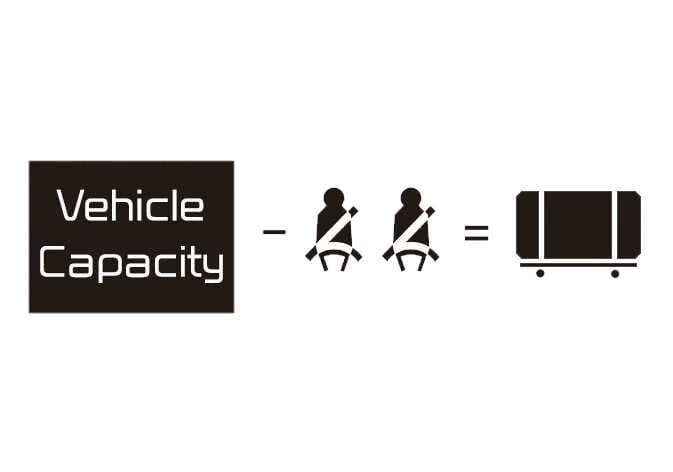
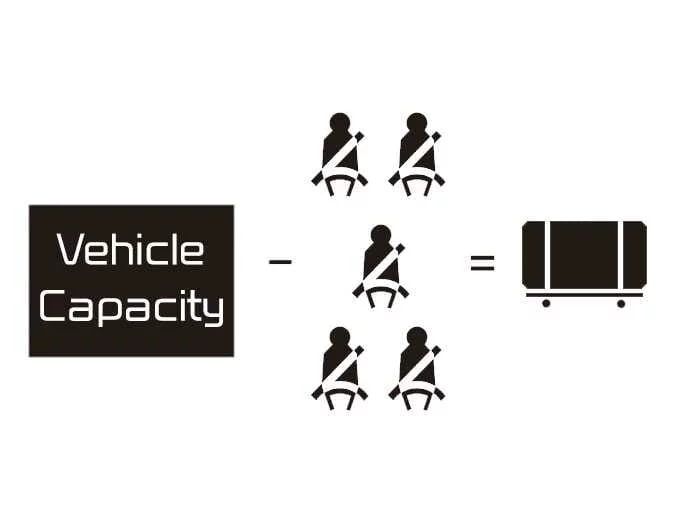
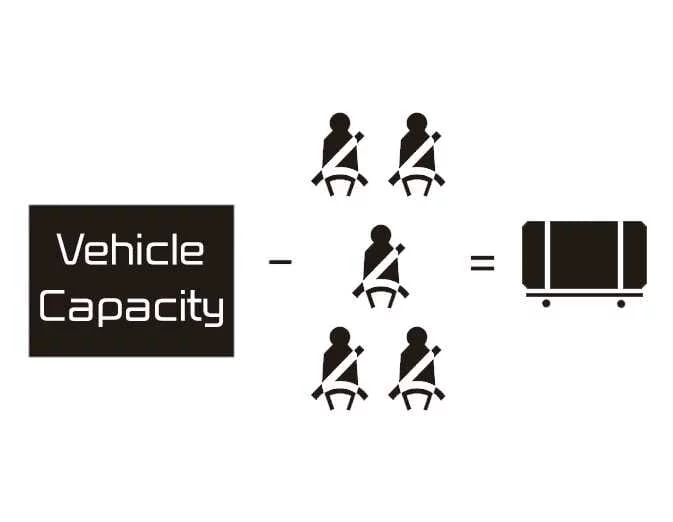
- Subtract this total passenger weight from the maximum load capacity figure (XXX kg or XXX lbs) specified on your vehicle's label.
- The resulting number represents your remaining available capacity for cargo and luggage. For example, if your Kia Sorento placard lists a maximum capacity of 1,400 lbs. and you are transporting five passengers weighing 150 lbs. each, your calculation would be: 1,400 - (5 x 150) = 650 lbs. of available cargo capacity.
- Carefully estimate the total combined weight of all luggage, gear, and cargo you intend to load. Ensure this total does not exceed the remaining capacity calculated in the previous step.
- If you are utilizing your Kia Sorento for towing, remember that a portion of the trailer's weight—the tongue load—is transferred to your vehicle's frame. Always refer to your owner’s manual to understand how this additional weight reduces your vehicle’s available cargo capacity.
WARNING
Loose cargo
Never travel with unsecured, heavy, or blunt objects—such as large suitcases or unfastened child seats—resting freely in the Kia Sorento passenger compartment. These items can become dangerous projectiles during emergency braking or in the event of a collision, potentially striking occupants and causing serious injury.
|
|
Item |
Description |
Total |
|---|---|---|
|
A |
Vehicle Capacity Weight |
849 lb (385 kg) |
|
B |
Subtract Occupant Weight 150 lb (68 kg) × 2 |
300 lb (136 kg) |
|
C |
Available Cargo and Luggage Weight |
549 lb (249 kg) |
|
|
Item |
Description |
Total |
|---|---|---|
|
A |
Vehicle Capacity Weight |
849 lb (385 kg) |
|
B |
Subtract Occupant Weight 150 lb (68 kg) × 5 |
750 lb (340 kg) |
|
C |
Available Cargo and Luggage Weight |
99 lb (45 kg) |
|
|
Item |
Description |
Total |
|---|---|---|
|
A |
Vehicle Capacity Weight |
849 lb (385 kg) |
|
B |
Subtract Occupant Weight 161 lb (73 kg) × 5 |
805 lb (365 kg) |
|
C |
Available Cargo and Luggage Weight |
44 lb (20 kg) |
Always verify the specific load constraints for your individual trim level by checking the tire and loading information label attached to the driver's door frame. To ensure optimal handling and safety, the total combined weight of all occupants, personal gear, and loaded cargo must never exceed the stated capacity weight of your Kia Sorento.
Certification label
For your convenience, the official vehicle certification label is permanently affixed to the driver side door sill at the center pillar.
|
This critical label details your Kia Sorento's Gross Vehicle Weight Rating (GVWR), which represents the maximum allowable weight of the fully loaded vehicle, including the chassis, all passengers, and any cargo on board. Furthermore, it specifies the Gross Axle Weight Rating (GAWR) for both the front and rear axles, which indicates the maximum load each individual axle is engineered to support.
To accurately determine the current load distribution on your axles, we recommend utilizing a professional weigh station. Your local authorized Kia dealer can assist with this process. When loading your vehicle, always strive for an even distribution of weight across the center line to maintain stable handling characteristics.
WARNING
Overloading
Adhering to weight limits is essential; never exceed the GVWR, the front or rear GAWR, or the total vehicle capacity weight. Exceeding these engineering limits will significantly degrade the braking performance and agility of your Kia Sorento, increasing the risk of an accident.
The information provided on the certification label is your primary guide for determining how much gear and equipment your vehicle can safely accommodate. Remember that all items stored within the cabin—tools, packages, or bags—possess the same momentum as the vehicle itself. In the event of an abrupt stop, sharp turn, or collision, these unsecured objects can shift violently, posing a severe injury risk to you and your passengers.
WARNING
Overloading
Avoid overloading your Kia Sorento at all costs. An overloaded vehicle generates excessive heat within the tires, which can lead to catastrophic tire failure. Additionally, it increases required stopping distances and compromises your ability to steer effectively, all of which substantially heighten the potential for a collision.
NOTE
Exceeding the designated weight limits of your Kia Sorento can result in premature mechanical wear and structural damage. Please be aware that any repairs necessitated by damage resulting from overloading are not eligible for coverage under your vehicle's warranty.
 Maintenance when towing a trailer. If you decide to tow a trailer
 Vehicle weight
See also:
4WD ECU Input&Output Diagram
...
Fuel Tank Pressure Sensor (FTPS)
Fuel Tank Pressure Sensor (FTPS) is a component of the evaporative emission
control system and is installed on the fuel tank, the fuel pump, or the canister.
It checks the purge control solen ...
Smart key unit Components
Connector Pin Information
No.
Connector A
Connector B
Connector C
1
V_BAT load
C_CAN Low
SSB illumination ground
2
...
Manuals list
- Kia Sorento MQ4 2021-2026 Owners Manual
- Kia Sorento XM 2011-2015 Owners Manual
- Kia Sorento XM 2011-2015 Service Manual
