 Kia Sorento: Limitations of Smart Cruise Control
Advanced driver assistance features are designed to enhance your journey, but the Smart Cruise Control system in your Kia Sorento may occasionally operate abnormally or unexpectedly under certain challenging environmental or traffic circumstances:
-
The front radar detection sensor, camera, or their surrounding areas are contaminated, obstructed, or physically damaged.
-
The windshield wipers are operating continuously or washer fluid is being actively sprayed across the glass.
-
The forward-facing camera lens is obscured by aftermarket window tints, protective film, specialized coatings, cracked glass, or foreign objects such as registration stickers and insects.
-
Accumulated moisture, condensation, or ice layers are present on the exterior or interior surface of the windshield.
-
Direct, glaring sunlight severely obstructs the field of view for the Kia Sorento front-view camera.
-
Intense streetlights or high-intensity headlights from oncoming traffic reflect off a wet, rain-slicked road surface.
-
The ambient temperature surrounding the front-view camera or radar module becomes excessively high or low.
-
Unsecured objects or reflective items are placed on top of the vehicle instrument panel near the windshield.
-
The external lighting conditions around your Kia Sorento are excessively bright or entirely dark.
-
Environmental brightness levels change abruptly, such as when rapidly entering or exiting highway tunnels and covered overpasses.
-
External visibility is low, and the vehicle headlights are either switched off or lack sufficient illumination power.
-
You are driving through severe weather conditions, including heavy downpours, blinding snowstorms, or thick, dense fog.
-
The vehicle sensors must contend with localized patches of thick steam, dense smoke, or deep overhead bridge shadows.
-
Only a partial silhouette or fraction of the preceding vehicle is successfully detected by the system.
-
The vehicle directly ahead lacks working tail lights or features an atypical, non-standard tail light configuration.
-
Ambient lighting is low, and the tail lights of the preceding vehicle are either turned off or insufficiently bright.
-
The rear profile of the vehicle ahead is unusually small, deformed, tilted, or overturned.
-
The preceding vehicle features an abnormally low or exceptionally high ground clearance.
-
Another motorist suddenly cuts aggressively into the lane directly ahead of your Kia Sorento.
-
Your Kia Sorento is currently being towed by another vehicle.
-
Stray light beams reflecting off roadside guardrails or nearby vehicles bounce directly into the front radar unit.
-
The bumper area housing the front radar has experienced a physical impact, sustained damage, or pushed the sensor out of alignment.
-
The operational temperature in the immediate vicinity of the front radar exceeds normal operating tolerances.
-
The vehicle traveling ahead is constructed using specialized materials that fail to adequately reflect front radar signals.
-
You are navigating complex roadway junctions near busy highways, highway interchanges, or electronic tollgates.
-
You are traveling across slippery, low-traction road surfaces slicked with fresh snow, freezing rain, or black ice.
-
You are traversing winding, sharply curved roadway sections.
-
A vehicle ahead is detected late due to sudden geometric changes in the road layout.
-
The path to the preceding vehicle is suddenly blocked by a stationary roadside obstacle.
-
A vehicle ahead abruptly changes travel lanes or slams on its brakes.
-
The body shape of the preceding vehicle is heavily distorted or obscured by heavy snow accumulation.
-
Your own driving inputs or vehicle trajectory are unstable.
-
You are navigating a traffic circle where the leading vehicle temporarily escapes sensor tracking.
-
You are continuously driving in a tight circular path or roundabout.
-
Rough, unpaved road conditions induce excessive vertical vibration throughout the vehicle chassis.
-
The overall ride height of your Kia Sorento is altered due to heavy cargo loads, severe passenger weight distribution, or abnormal tire pressures.
-
You are driving through specific challenging environments:
-
Busy multi-level parking structures or underground garages.
-
Active construction zones, unpaved dirt roads, uneven patches, or roads featuring frequent speed bumps.
-
Steeply graded inclines or sharply winding scenic routes.
-
Roadside corridors lined with dense rows of overhanging trees or closely spaced streetlights.
-
Narrow rural lanes flanked by overgrown foliage and brush.
-
Zones saturated with heavy electromagnetic interference, strong radio frequencies, or high electrical noise.
-
-
You are driving through enclosed concrete tunnels or covered historical bridges.
-
You are cruising near industrial sectors with heavy concentration of metal infrastructure, active railroad crossings, or temporary metal road plating.
-
You are driving across wide, open geographical plains or desert stretches where surrounding vehicles and permanent structures are entirely absent.
-
Driving on a curved road
When navigating winding curves, the Smart Cruise Control system may temporarily fail to track a vehicle traveling within the exact same lane, which can cause your Kia Sorento to accelerate toward your pre-set cruising velocity. Conversely, your vehicle speed may drop rapidly if a preceding vehicle enters the sensor beam suddenly.
Always select an appropriate cruising speed before entering sharp curves, and remain ready to engage the brake or accelerator pedals manually based on real-time road conditions.
The Kia Sorento Smart Cruise Control may also decrease your vehicle speed unexpectedly due to the presence of another vehicle occupying an adjacent parallel lane.
Verify that current traffic conditions safely permit continued automated operation. If circumstances demand it, apply pressure to the brake pedal immediately to reduce velocity and secure a safe following buffer.
-
Driving on an inclined road
When climbing steep hills or descending long downgrades, the Smart Cruise Control setup may briefly lose track of moving traffic ahead in your lane, leading your Kia Sorento to accelerate toward the configured limit. Vehicle momentum will adjust quickly once a leading vehicle re-enters the active sensor zone.
Exercise caution, pre-select sensible speeds for mountain driving, and manually manage the brake and accelerator pedals as roadway gradients shift.
-
Changing lanes
-
Your vehicle
-
Lane changing vehicle
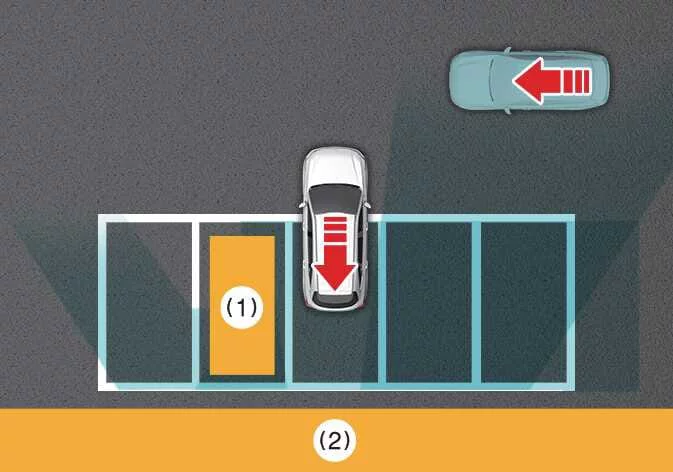
When another motorist (2) merges into your travel lane from an adjacent path, front sensors cannot register their presence until they cross fully into the active detection window. Consequently, Smart Cruise Control may experience a slight delay before reacting to abrupt lane changes. Always sustain a safe manual braking buffer and step on the brake pedal whenever traffic dictates.
-
-
Detecting a vehicle
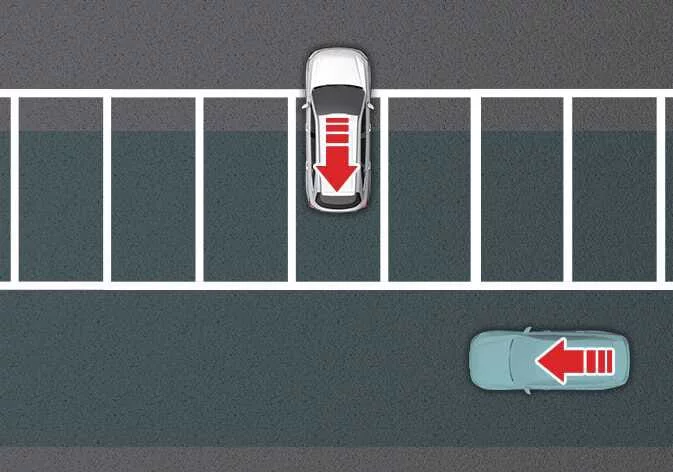
The integrated sensor array cannot effectively isolate or track specific categories of vehicles and obstacles under normal driving conditions:
-
Vehicles traveling offset toward the extreme edges of a lane.
-
Extremely slow-moving traffic or vehicles experiencing sudden, heavy deceleration.
-
High-clearance commercial vehicles or trucks carrying oversized loads that overhang past the rear bumper.
-
Vehicles with front suspension lifted upward due to excessive weight distribution.
-
Objects or vehicles positioned within approximately 6 ft (2m) of your front bumper.
-
Oncoming vehicles traveling in the opposite direction.
-
Completely stationary or parked vehicles.
-
Trailers or towed equipment featuring a narrow or minimal rear profile.
-
Narrow profiles such as motorcycles, mopeds, or bicycles.
-
Unconventional specialty utility vehicles.
-
Animals and pedestrians crossing the roadway.
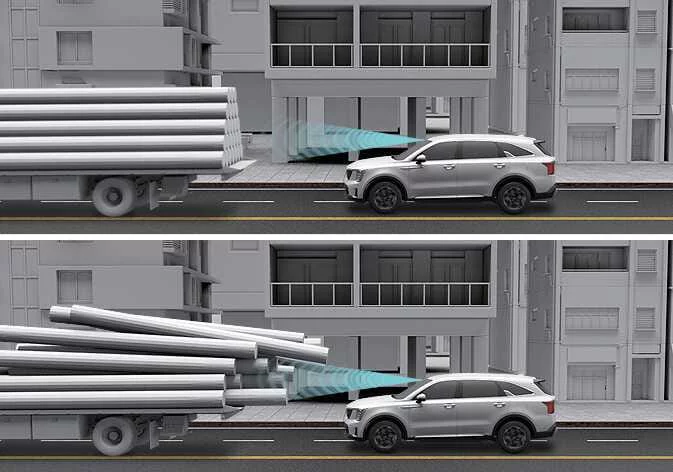
Always maintain vigilant focus on dynamic road conditions to ensure safe operation of your Kia Sorento. If necessary, adjust your velocity manually. Furthermore, the front sensors cannot track a leading vehicle properly during specific steering maneuvers:
-
When actively turning or steering your vehicle.
-
When driving along narrow, tightly winding roads.
-
-
When a vehicle ahead disappears from view at an intersection
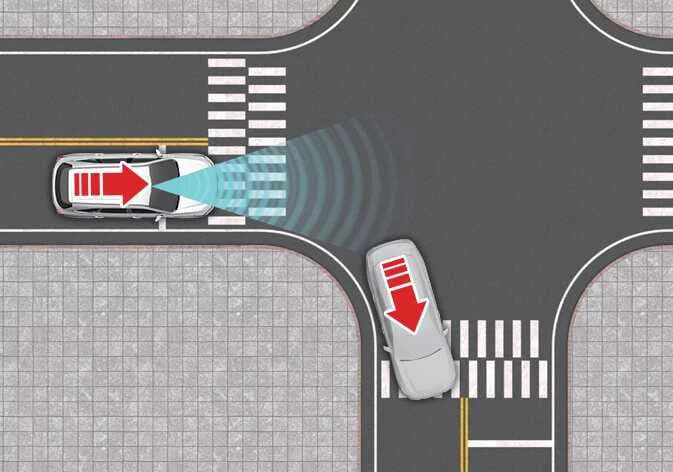
When a leading car turns off or moves out of direct line-of-sight at an intersection or crossroad, your Kia Sorento may interpret the cleared path as an opportunity to accelerate toward the set cruise limit.
Always remain attentive to changing traffic patterns and road layouts.
-
When a vehicle ahead of you changes lanes
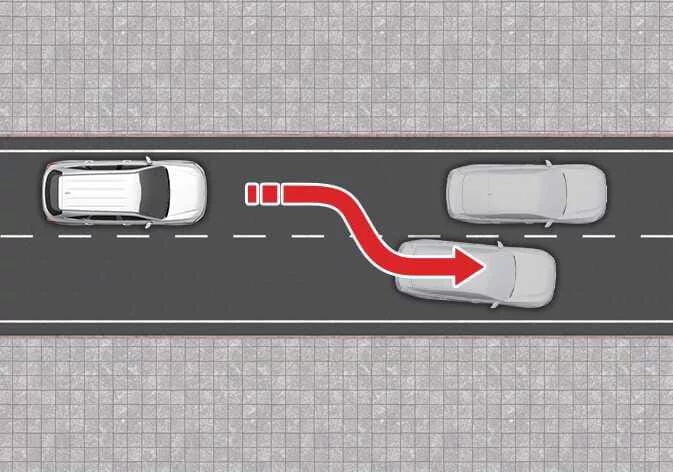
If the vehicle directly in front of you switches lanes, the Smart Cruise Control system may experience a brief registration delay before locking onto any newly revealed vehicle that has rotated into your path.
Keep your eyes focused ahead on the road and surrounding traffic flow at all times.
-
Always look out for pedestrians
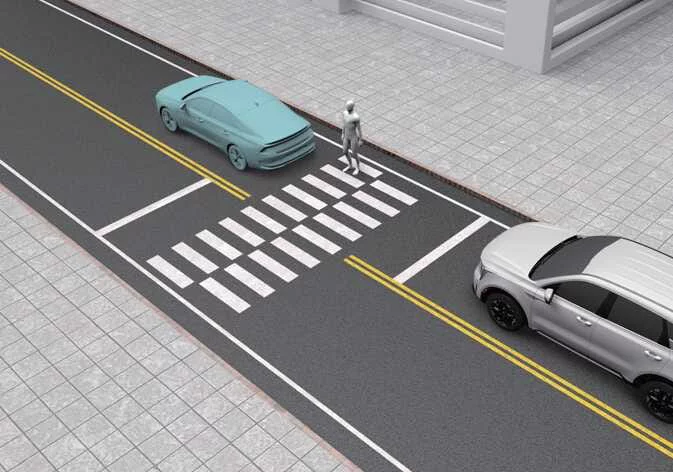
Always remain vigilant for pedestrians and non-vehicular traffic while your Kia Sorento maintains its designated following distance behind leading vehicles.
 Smart Cruise Control malfunction
 FCC Regulatory Compliance
See also:
Components
1. Blind Spot Detection (BSD) Unit
2. BSD switch
3. Speaker (Built in the cluster)
4. BSD warning lamp (Built in the outside mirror)
...
This device complies with Part 15 of the FCC rules.
Operation of onboard electronics inside your Kia Sorento is subject to the following two fundamental conditions:
This device may not cause harmful electromagnetic interference, and
...
Rear Washer Motor Inspection
1.
With the washer motor connected to the reservoir tank, fill the
reservoir tank with water.
...
Manuals list
- Kia Sorento MQ4 2021-2026 Owners Manual
- Kia Sorento XM 2011-2015 Owners Manual
- Kia Sorento XM 2011-2015 Service Manual
