
 Kia Sorento: ISG malfunction. Smart ISG features
ISG malfunction
Your Kia Sorento features robust diagnostic monitoring; however, ISG may suspend operation if a related sensor or network module encounters a fault, resulting in the following indicators:
|
-
The yellow AUTO STOP (
 ) indicator icon blinks for 5 seconds
before
glowing solid on the instrument cluster.
) indicator icon blinks for 5 seconds
before
glowing solid on the instrument cluster. -
The status light on the dashboard ISG OFF button remains lit.
While the engine sits in Idle Stop mode, it can crank and restart automatically without warning. Before stepping away from your vehicle or working inside the engine bay, always press the ENGINE START/STOP button to the OFF position.
NOTE
If you disconnect or swap out the Absorbent Glass Mat (AGM) battery, the ISG system will not resume operation right away. The battery monitoring sensor requires approximately 4 hours of calibration time with the vehicle ignition switched OFF. Once calibration completes, cycle the engine ignition ON and OFF 2 to 3 times to restore full system readiness.
Smart ISG features
Early Engine Restart
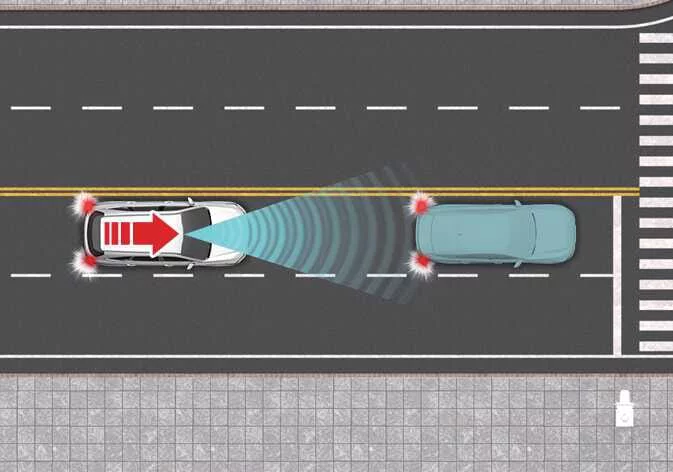
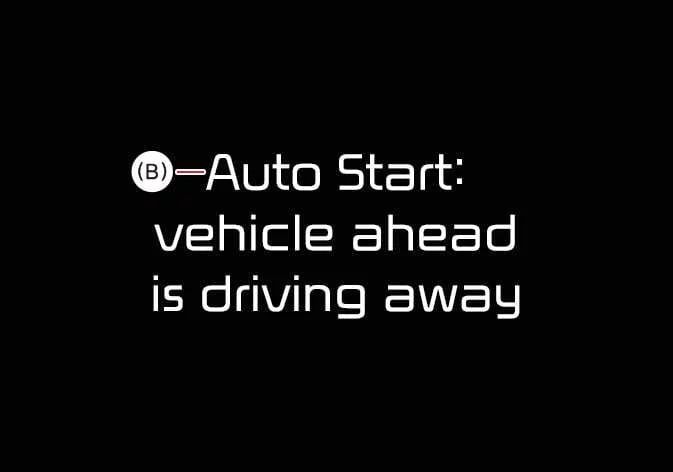
The Idle Stop & Go (ISG) system in the Kia Sorento is designed for maximum efficiency, but it also prioritizes responsiveness. When the engine is automatically stopped, the Early Engine Restart function intelligently monitors traffic flow. If the front-view camera detects that the vehicle ahead has begun to pull away, the Kia Sorento can automatically restart the engine, ensuring you are ready to move the moment traffic clears without requiring direct driver intervention.
|
|
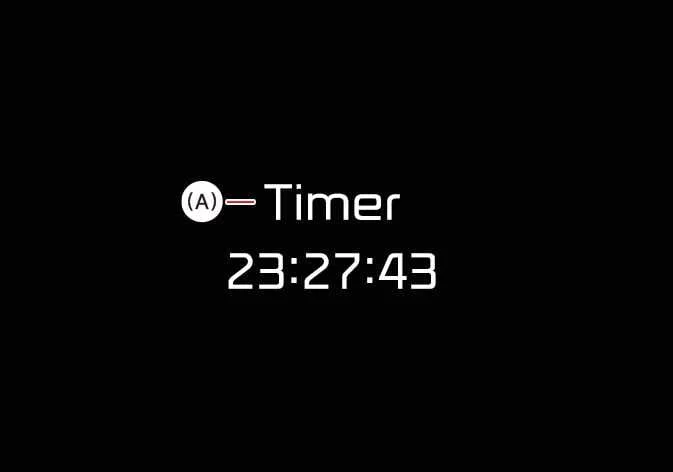
Whenever the Early Engine Restart feature triggers an automatic restart, a clear notification is displayed on the instrument cluster to keep the driver informed, provided the AUTO STOP page is currently selected in the menu.
|
|
(A) Timer
(B) Auto Start: vehicle ahead is driving away
TIP
-
While this system is highly advanced, Early Engine Restart may occasionally fail to trigger if the front-view camera cannot accurately confirm the movement of the vehicle ahead due to specific environmental variables.
-
For a detailed breakdown of how sensor visibility affects performance, please consult the section regarding the Limitations of Smart ISG features.
-
Remember that you always maintain full control of the Kia Sorento; you can manually restart the engine at any time, regardless of the ISG status, simply by releasing the brake pedal.
ISG inhibition at traffic signs (STOP, YIELD, and Roundabout)
To enhance safety and driving comfort, the Kia Sorento utilizes traffic sign recognition to manage the ISG system proactively. By detecting specific signage—such as STOP, YIELD, and Roundabout signs—the system can inhibit the auto-stop function, ensuring the engine remains running when you are navigating these intersection types.
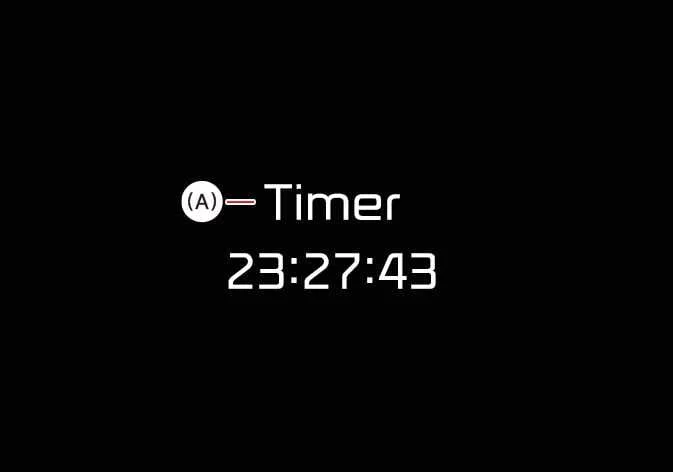
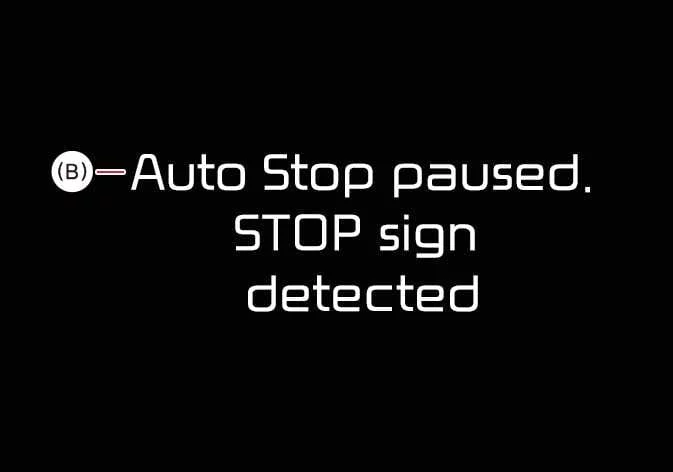
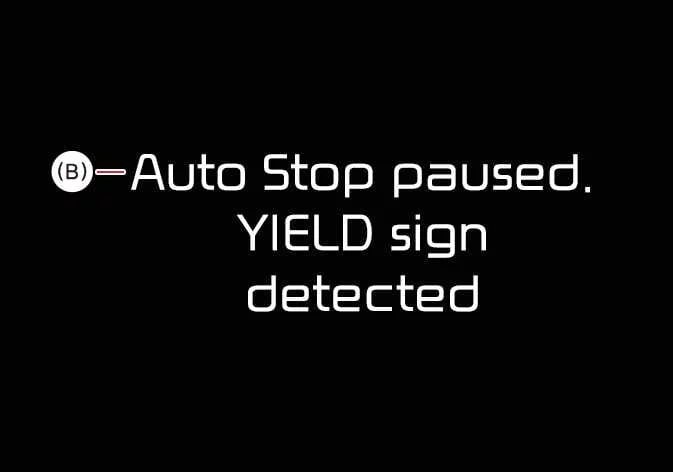
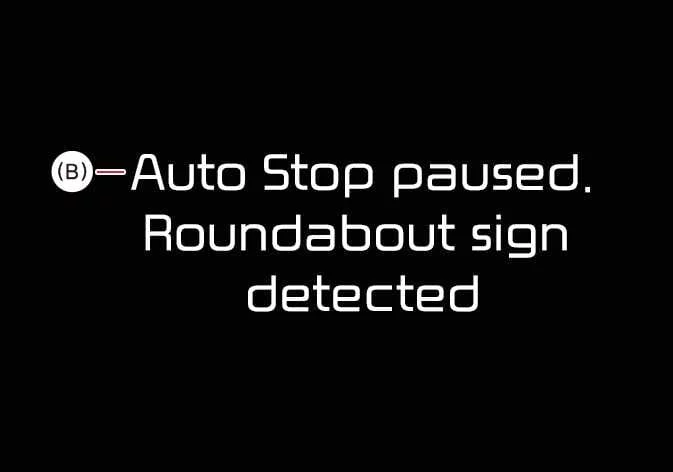
Should the Kia Sorento identify one of these signs and temporarily deactivate the ISG system, you will see a corresponding status message on the instrument cluster when viewing the AUTO STOP page.
|
|
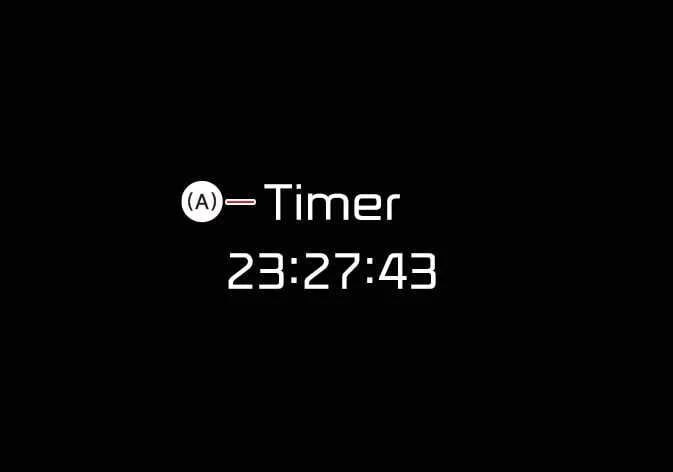
(A) Timer
(B) Auto Stop paused. STOP sign detected
|
|
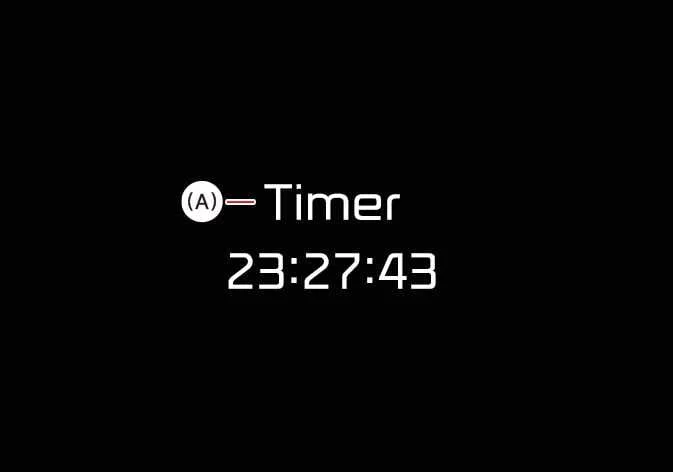
(A) Timer
(B) Auto Stop paused. YIELD sign detected
|
|
(A) Timer
(B) Auto Stop paused. Roundabout sign detected
TIP
-
Inhibition of the ISG system is dependent on clear camera visibility. If the front-view camera fails to identify a STOP, YIELD, or Roundabout sign, the system may not deactivate as expected.
-
For more details on how sign recognition limitations impact the Kia Sorento, refer to the Limitations of Smart ISG features.
TIP
Limitations of Smart ISG features
-
The sophisticated Smart ISG features of the Kia Sorento may exhibit abnormal behavior or unexpected deactivations under the following real-world driving conditions:
-
The front-view camera sensor or its immediate surrounding area is obscured by dirt, debris, or physical damage.
-
Ambient temperatures around the camera assembly are outside of the optimal operating range (extremely high or low).
-
The camera's field of view is compromised by aftermarket windshield tints, films, protective coatings, cracked glass, or external objects such as stickers or insects.
-
Visibility is impaired by moisture, frost, or ice accumulating on the windshield.
-
Adverse weather conditions are present, including heavy rainfall, snowfall, or dense fog.
-
Direct sunlight glare saturates the front-view camera’s field of view.
-
Artificial lighting, such as street lamps or the headlights of oncoming vehicles, causes strong reflections on wet road surfaces.
-
Your Kia Sorento is currently being towed.
-
Environmental lighting conditions are excessively bright or critically dark.
-
Rapid changes in illumination occur, such as when entering or exiting tunnels or covered parking structures.
-
External brightness is low and the vehicle's headlights are either switched off or have insufficient output.
-
Only a portion of the preceding vehicle is within the camera's detection range.
-
The vehicle directly ahead is a large bus, a heavy-duty truck, or a vehicle carrying oversized, bulky, or trailing cargo.
-
The vehicle ahead lacks conventional tail lights or utilizes an atypical lighting configuration.
-
The rear profile of the target vehicle is too small, or its orientation is abnormal, such as being tilted or overturned.
-
The preceding vehicle’s ground clearance is unusually low or extremely high.
-
Another vehicle, pedestrian, or cyclist suddenly maneuvers into your lane.
-
The preceding vehicle is detected with a delay due to sensor processing latency.
-
The vehicle ahead is suddenly obscured by a physical obstacle or structure.
-
The vehicle ahead performs an abrupt lane change or executes a rapid deceleration.
-
The bodywork of the vehicle ahead is severely damaged or bent out of shape.
-
The vehicle ahead steers aggressively in the opposite direction to perform an emergency collision avoidance maneuver.
-
You execute a lane change while driving at low speeds with a vehicle present ahead of you.
-
The vehicle ahead is heavily covered in snow or road grime.
-
Your own vehicle is in the process of departing from or returning to a lane.
-
Your driving trajectory is erratic or unstable.
-
You are navigating a traffic circle where road curvature obstructs the line-of-sight to the vehicle ahead.
-
You are continuously driving in a circular path or tight roundabout.
-
The vehicle ahead features an unconventional or non-standard shape.
-
-
Traffic sign recognition in the Kia Sorento may encounter difficulties under these specific circumstances:
-
Signs are positioned on steep uphill or downhill gradients, moving them outside the camera's effective vertical focus.
-
Signs are located several lanes away, making them difficult to verify accurately.
-
Signs are obscured—either partially or entirely—by other vehicles, foliage, or roadside infrastructure.
-
Signs have been vandalized with graffiti, stickers, or have suffered structural damage.
-
Signs are oriented away from your vehicle’s trajectory, preventing the camera from reading the face of the sign.
-
 Operating conditions. Deactivating ISG
 Drive mode integrated control system. Drive mode
See also:
Daytime running light (DRL): (if equipped). Lighting control
Daytime running light (DRL): (if equipped)
The DRL can make it easier for others to see the front of your Kia Sorento during the day.
The DRL can be helpful in many different driving conditions, esp ...
EBD (Electronic Brake-force Distribution)
The EBD system (Electronic Brake force Distribution) as a sub-system of
the ABS system is to control the maximum braking effectiveness by the rear wheels.
It further utilizes the efficiency ...
Starter Cleaning
1.
Do not immerse parts in cleaning solvent.
Immersing the yoke assembly and/or armature will damage the insulation
wipe these parts with a cloth only.
...
Manuals list
- Kia Sorento MQ4 2021-2026 Owners Manual
- Kia Sorento XM 2011-2015 Owners Manual
- Kia Sorento XM 2011-2015 Service Manual
