
 Kia Sorento: Blind-Spot Collision-Avoidance Assist malfunction and limitations
Blind-Spot Collision-Avoidance Assist malfunction
|
(A) Check Driver Assistance system. |
When Blind-Spot Collision-Avoidance Assist is not working properly, the Master warning light (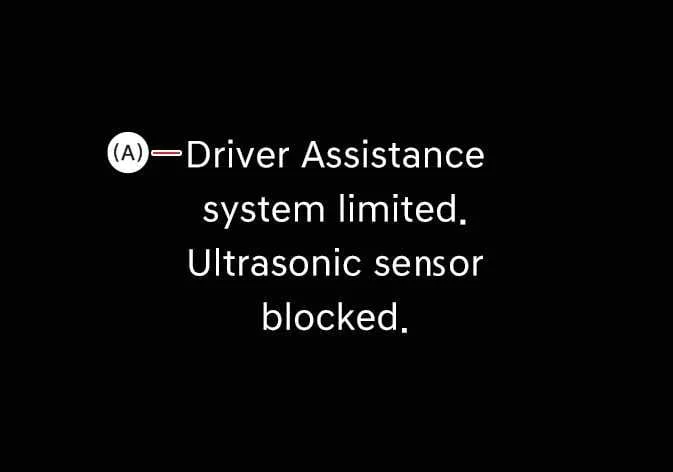 ) appears on the instrument cluster,
along
with a warning message, which lasts for several seconds. If this occurs, have Blind-Spot Collision-Avoidance Assist
inspected by an authorized Kia dealer.
) appears on the instrument cluster,
along
with a warning message, which lasts for several seconds. If this occurs, have Blind-Spot Collision-Avoidance Assist
inspected by an authorized Kia dealer.
|
(A) Check side view mirror warning light |
When the outside rearview mirror warning light is not working properly, the Master warning light ( ) appears on the instrument cluster, along with
a
warning message, which lasts for several seconds. If this occurs, have Blind-Spot Collision-Avoidance Assist
inspected
by an authorized Kia dealer.
) appears on the instrument cluster, along with
a
warning message, which lasts for several seconds. If this occurs, have Blind-Spot Collision-Avoidance Assist
inspected
by an authorized Kia dealer.
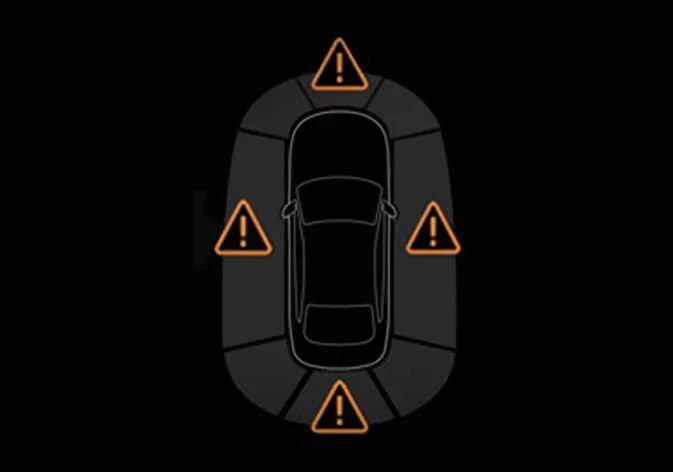
Blind-Spot Collision-Avoidance Assist disabled
|
|
(A) Driver Assistance system limited. Radar blocked. |
When foreign material (such as snow or rain) covers the rear bumper near the rear corner radar or sensor, or when you install a trailer or carrier, it can reduce the detection performance and temporarily limit or disable Blind-Spot Collision-Avoidance Assist in your Kia Sorento.
A warning message and the Master warning light () display on the instrument cluster. This does
not
indicate a Blind-Spot Collision-Avoidance Assist malfunction.
Blind-Spot Collision-Avoidance Assist operates properly after you remove foreign material (such as snow or rain) from the sensor or obstructions (such as a trailer or carrier) from the rear bumper then restart the vehicle.
If Blind-Spot Collision-Avoidance Assist still does not operate properly after you remove foreign material (such as snow or rain) from the sensor or obstructions (such as a trailer or carrier) from the rear bumper, have the vehicle inspected by an authorized Kia dealer.
WARNING
-
Even when a warning message does not appear on the instrument cluster, Blind-Spot Collision-Avoidance Assist may not operate properly.
-
Blind-Spot Collision-Avoidance Assist may not operate properly in an area (such as, open terrain) where any objects are not detected right after the you turn ON the vehicle, or when the detection sensor is blocked with foreign material right after you turn ON the vehicle.
CAUTION
Turn OFF Blind-Spot Collision-Avoidance Assist to install or remove a trailer, carrier, or other attachment. Turn ON Blind-Spot Collision-Avoidance Assist when you are finished.
TIP
You can check the Blind-Spot Collision-Avoidance Assist status in the service message of the utility information view of the instrument cluster display window in your Kia Sorento.
Limitations of Blind-Spot Collision-Avoidance Assist
Blind-Spot Collision-Avoidance Assist may operate abnormally or unexpectedly under the following circumstances:
-
There is inclement weather, such as heavy snow or rain.
-
The detection sensor is covered with snow, rain, dirt, and so on.
-
The ambient temperature around the detection sensor is very high or low.
-
The detection sensor is blocked while you drive near a vehicle, pillar, or wall.
-
You are driving on a highway ramp or through a tollgate.
-
The pavement contains abnormally metallic components (such as debris left from subway construction).
-
There are fixed objects near the vehicle, such as sound barriers, guardrails, central dividers, entry barriers, street lights, signs, tunnels, walls, and so on.
-
You are driving on a narrow road with overgrown foliage.
-
You are driving in wide open areas where there are few vehicles or structures.
-
You are driving on a wet road surface.
-
Other vehicles are moving very close behind you or passing you.
-
Other vehicles are moving very fast when passing you.
-
You pass another vehicle.
-
You change lanes.
-
You and a vehicle next to you accelerate simultaneously.
-
A vehicle in the next lane moves 2 lanes away from you, or the vehicle 2 lanes away moves to the lane next to you.
-
You have installed a trailer or carrier near the rear corner radar.
-
You cover the bumper near the rear corner radar with objects such as a bumper sticker, bike rack, and so on.
-
The bumper near the front or rear corner radar is damaged, or the radar is out of position.
-
Your vehicle height is low or high due to heavy loads, abnormal tire pressure, and so on.
-
The following objects are detected:
-
A motorcycle or bicycle.
-
A vehicle towing a flat-bed trailer.
-
A large vehicle, such as a bus or truck.
-
A moving obstacle, such as a pedestrian, animal, shopping cart, or stroller.
-
A shorter vehicle such as a sports car.
-
Pay extra attention. Braking control may not operate under the following conditions:
-
The vehicle vibrates intensely while you drive over a bumpy road or pothole.
-
You drive on a slippery surface such as snow, water, ice, and so on.
-
Tire pressure is low or tires are damaged.
-
The braking system has been modified.
-
You steer abruptly.
WARNING
-
Driving on a curved road
Blind-Spot Collision-Avoidance Assist may not operate properly on a curved road. Blind-Spot Collision-Avoidance Assist may not detect the vehicle in the next lane.
Always pay attention to road and driving conditions.
Blind-Spot Collision-Avoidance Assist may not operate properly when driving on a curved road. Always pay attention to road and driving conditions while driving.
-
Driving on an inclined road
Blind-Spot Collision-Avoidance Assist may not operate properly when you drive on a slope. The function may not detect the vehicle in the next lane, or may incorrectly detect the ground or a structure. Always pay attention to road and driving conditions.
The setting menu may not be available for your vehicle depending on your vehicle features and specifications.
-
Driving where the road is merging or dividing
Blind-Spot Collision-Avoidance Assist may not operate properly when you drive where the road merges or divides. The function may not detect the vehicle in the next lane. Always pay attention to road and driving conditions.
If there is a problem with Navigation-based Smart Cruise Control, the function cannot be set from the Settings menu.
-
Driving where the heights of the lanes are different
Blind-Spot Collision-Avoidance Assist may not operate properly when you drive where the heights of the lanes are different. The function may not detect the vehicle on a road with different lane heights (such as an underpass joining section, grade separated intersection, and so on). Always pay attention to the road and driving conditions.
The route to the destination is changed or canceled by resetting the navigation.
WARNING
-
When you are towing a trailer or another vehicle, make sure that you turn OFF Blind-Spot Collision-Avoidance Assist in your Kia Sorento.
-
Blind-Spot Collision-Avoidance Assist may not operate properly in areas with strong electromagnetic interference.
-
Blind-Spot Collision-Avoidance Assist may not activate for approximately 3 seconds after you start the vehicle or initialize the front view camera or rear corner radars.
This device complies with Part 15 of the FCC rules.
Operation is subject to the following two conditions:
-
This device may not cause harmful interference, and
-
this device must accept any interference received, including interference that may cause undesired operation.
TIP
Changes or modifications not expressly approved by the party responsible for compliance could void the user’s authority to operate the equipment.
 Blind-Spot Collision-Avoidance Assist settings. Blind-Spot Collision-Avoidance Assist operation
 Safe Exit Warning (SEW): (if equipped)
See also:
Knock Sensor (KS)
Knocking is a phenomenon characterized by undesirable vibration and noise
and can cause engine damage. Knock Sensor (KS) is installed on the cylinder
block and senses engine knocking.
Whe ...
Manuals list
- Kia Sorento MQ4 2021-2026 Owners Manual
- Kia Sorento XM 2011-2015 Owners Manual
- Kia Sorento XM 2011-2015 Service Manual
