
 Kia Sorento: Electronic Stability Control (ESC) system
The Electronic Stability Control (ESC) system integrated into your Kia Sorento is designed to actively stabilize your vehicle during cornering maneuvers to mitigate the risk of losing control and preventing potential accidents.
|
The ESC system selectively engages the brakes on individual wheels and intervenes with the engine management system when necessary to restore directional stability and keep your Kia Sorento safely on course.
Electronic stability systems cannot defy physics or completely prevent accidents caused by excessive speed in sharp turns, abrupt emergency steering maneuvers, or severe hydroplaning on rain-slicked road surfaces.
Only a cautious and attentive driver can prevent accidents by avoiding reckless inputs that could cause the vehicle to lose traction. Even with advanced ESC installed, always follow fundamental safe driving precautions, including maintaining appropriate speeds for prevailing road and weather conditions.
For maximum personal protection, always fasten your seatbelt securely. No safety system, regardless of how advanced, can completely compensate for driver error or extreme driving environments. Always operate your Kia Sorento responsibly.
The ESC is an intelligent electronic aid that helps you maintain control under adverse driving conditions, but it is never a substitute for safe driving habits. Factors such as vehicle speed, road friction, and steering angle directly affect how effectively ESC prevents skidding. It remains your primary responsibility to drive and turn at reasonable speeds while leaving a safe stopping margin.
When you press the brake pedal firmly under slippery conditions that would ordinarily lock the wheels, you may hear a ticking sound or feel a pulsing sensation in the brake pedal. This is completely normal and indicates that your anti-lock braking system is active.
You may hear a subtle mechanical click sound inside the cabin when your Kia Sorento begins to move forward immediately after starting the engine. This is a normal self-test sound and indicates that vehicle systems are functioning properly.
ESC operation
The ESC system operates under the following conditions:-
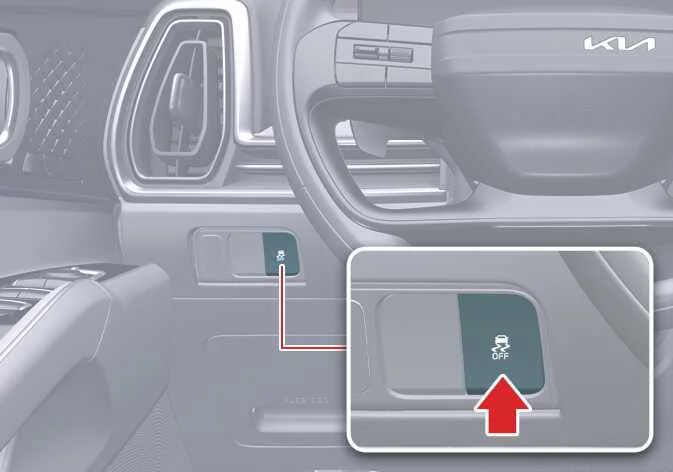
When you press the ENGINE START/STOP button into the ON position, both the ESC and ESC OFF indicator lights illuminate for approximately 3 seconds, after which the ESC system enters active standby mode.
-
After your Kia Sorento is powered ON, press and hold the ESC OFF button for at least half a second to deactivate the ESC system (the ESC OFF indicator light will appear on the instrument cluster). To turn the system back ON, press the ESC OFF button once more, and the indicator light will extinguish.
-
When starting the engine, you might notice a faint clicking sound. This is the ESC system performing an automatic startup self-diagnosis and does not signal any mechanical fault.
 When the ESC system is actively
intervening to stabilize your Kia Sorento, the ESC indicator light will blink continuously.
When the ESC system is actively
intervening to stabilize your Kia Sorento, the ESC indicator light will blink continuously.
When the ESC is operating actively, you may feel a slight pulsation through the vehicle chassis or steering wheel. This normal feedback confirms the system is working.
When attempting to rock your vehicle out of deep mud or driving across exceptionally slippery surfaces, pressing the accelerator pedal firmly may not immediately increase engine RPM as the traction control manages wheel spin.
ESC operation OFF
 Your Kia Sorento features two distinct OFF states for
the
ESC system. If you bring your vehicle to a stop while ESC is turned off, it remains off; however, restarting the engine
will automatically restore ESC to the active ON state by default.
Your Kia Sorento features two distinct OFF states for
the
ESC system. If you bring your vehicle to a stop while ESC is turned off, it remains off; however, restarting the engine
will automatically restore ESC to the active ON state by default.
|
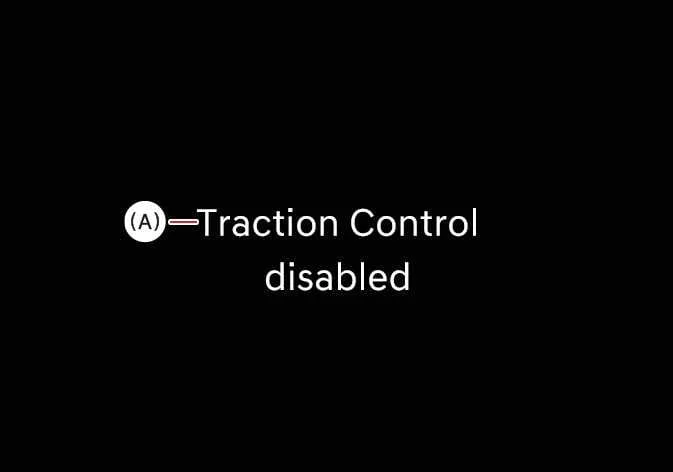
(A) Traction Control disabled |
To turn off the traction control function while keeping the ESC brake stability control active, press the ESC OFF
button (ESC OFF  ) briefly for less than 3 seconds. The designated ESC
OFF
indicator light (ESC OFF
) briefly for less than 3 seconds. The designated ESC
OFF
indicator light (ESC OFF 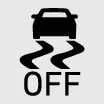 ) will illuminate.
|
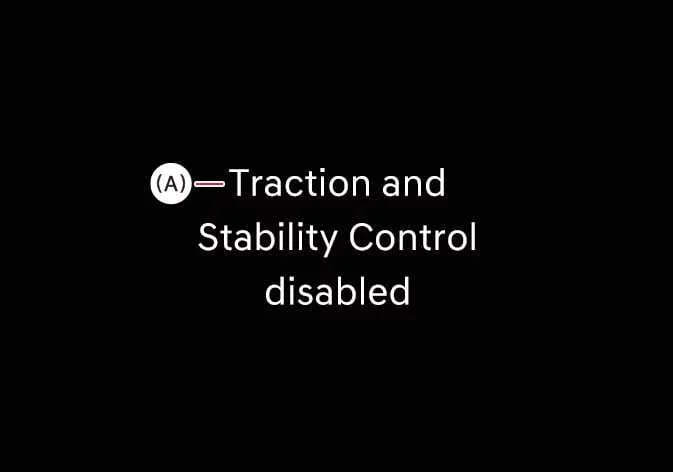
(A) Traction and Stability Control disabled |
To completely disable both the traction control and stability brake control functions of the ESC system, press and
hold the ESC OFF button (ESC OFF 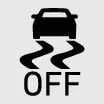 ) for more than 3 seconds. The ESC OFF indicator light (ESC
OFF
) for more than 3 seconds. The ESC OFF indicator light (ESC
OFF
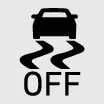 ) will appear on the dash accompanied by an audible warning chime, indicating
that ESC is fully disengaged.
) will appear on the dash accompanied by an audible warning chime, indicating
that ESC is fully disengaged.
Indicator light

|
|
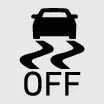
When you turn the ignition switch to the ON position, the ESC OFF indicator light illuminates briefly and then turns off if the ESC system is operating normally.
The ESC indicator light blinks whenever stability control is actively intervening or remains lit continuously if a system fault is detected.
The ESC OFF indicator light appears whenever you manually use the console button to disable the stability system.
Always drive with caution even when your Kia Sorento is equipped with advanced ESC technology. The system can only assist in maintaining control within physical boundaries and specific operating conditions.
ESC OFF usages
-
Keep the ESC system turned ON during everyday driving whenever possible to ensure maximum active safety.
-
If you need to disable ESC manually, always press the ESC OFF button while driving slowly on a flat, stable road surface.
Never press or hold the ESC OFF button while the electronic stability control system is actively intervening and the ESC indicator light is blinking.
Disabling stability control while the system is actively working to correct a skid can cause your Kia Sorento to lose directional control unexpectedly.
-
When testing your vehicle on a chassis dynamometer, verify that the ESC system is turned completely OFF and the ESC OFF indicator light is lit. Leaving ESC enabled during dyno testing can restrict engine speed acceleration and generate false diagnostic codes.
-
Turning the ESC system off does not affect the operation of the Anti-lock Brake System (ABS) or general hydraulic brake functions.
 Anti-lock Brake System (ABS)
 Downhill Brake Control (DBC). DBC operation. Hill-start Assist Control (HAC)
See also:
Rear Air Conditioner Unit Component Location
...
SRS Control Module (SRSCM) Components
...
4WD ECU Components Location
1. 4WD ECU
...
Manuals list
- Kia Sorento MQ4 2021-2026 Owners Manual
- Kia Sorento XM 2011-2015 Owners Manual
- Kia Sorento XM 2011-2015 Service Manual
