
 Kia Sorento: TPMS malfunction indicator. Tire replacement with TPMS
TPMS malfunction indicator
When an internal fault occurs within the monitoring network, the low tire pressure indicator light 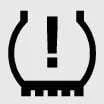 illuminates continuously after blinking for approximately one minute upon startup.
If the system simultaneously detects an active underinflation warning alongside an electronic component failure, it will illuminate both the master TPMS malfunction telltale and the individual low tire pressure position indicator lights. For instance, if the front left sensor stops responding, the general malfunction light appears; however, if another tire is simultaneously losing air, its specific position indicator will light up alongside the system error alert.
Have your Kia Sorento inspected by an authorized Kia dealership as soon as possible to accurately diagnose and resolve the underlying fault:
-
The TPMS malfunction indicator light can occasionally trigger if you operate your vehicle in close proximity to heavy electric power supply grids or high-power radio transmitters—such as police facilities, government properties, broadcasting antennae, military bases, airports, and communications towers—which can temporarily disrupt wireless sensor communication.
-
Interference with normal TPMS signal transmission may also occur if your Kia Sorento is fitted with metal tire chains, or if you actively operate unshielded personal electronic devices inside the cabin, such as laptops, mobile chargers, aftermarket remote starters, or portable navigation units.
Tire replacement with TPMS
If you experience a sudden flat tire while driving your Kia Sorento, the dedicated low tire pressure indicator light will immediately illuminate on your instrument cluster. Have the damaged tire professionally repaired by an authorized Kia dealer as soon as possible, or swap out the compromised assembly with your emergency spare tire.
NOTE
Repair Agents
Never utilize puncture-repairing chemical sealants that lack official approval from Kia when attempting to fix or reinflate a low-pressure tire on your Kia Sorento. Unapproved sealing compounds can chemically coat and permanently damage the sensitive tire pressure monitoring sensor.
Every wheel assembly features an integrated tire pressure sensor mounted securely inside the tire directly behind the valve stem. You must always use TPMS-compatible wheels, and routine tire servicing should be exclusively entrusted to an authorized Kia dealer.
Even after you replace the low-pressure flat tire with your temporary or full-size spare, the low tire pressure warning light will remain continuously illuminated until the original wheel is properly repaired and reinstalled or the spare's sensor is registered.
The TPMS malfunction indicator light may appear a few minutes after you mount the spare tire. This occurs because the electronic sensor housed on the spare wheel has not yet been activated or synchronized with your vehicle's receiver module.
Once you inflate your repaired tire to the recommended manufacturer specification and reinstall it on your Kia Sorento, or alternatively have the spare wheel's TPMS sensor activated by an authorized Kia dealer, both the system malfunction and low pressure indicator lights will automatically turn OFF within a few minutes of normal driving.
If the dashboard warning lights fail to extinguish after a brief period of driving, schedule a service visit with an authorized Kia dealer for diagnostic checks.
When swapping a standard road wheel with the spare, remember that the active sensor on the spare must be programmed into the system, while the sensor on the original wheel stored in the carrier should ideally be deactivated. Leaving multiple active sensors transmitting from the cargo area can disrupt proper TPMS functionality. Have your tire hardware serviced or adjusted by an authorized Kia dealer.
It is often difficult to spot a low-pressure tire simply by visual inspection. Always rely on a high-quality, calibrated tire pressure gauge to measure your Kia Sorento tire inflation accurately. Bear in mind that tires running warm immediately after a drive will yield artificially higher pressure readings compared to cold tires that have sat stationary for at least three hours or traveled less than 1 mile (1.6 km).
Always allow tires to cool down completely before checking their pressure, and ensure they are cold before adding air to meet recommended targets.
Never inject aerosol tire sealants into your tires if your vehicle is equipped with an active TPMS network. Liquid sealants can coat the electronic pressure sensors, triggering critical failures such as:
-
Preventing the TPMS architecture from alerting you to severe, sudden pneumatic damage caused by external road hazards like nails or sharp debris.
-
Compromising structural stability; if you experience any sudden vehicle handling issues while driving your Kia Sorento, immediately ease off the accelerator, apply gentle and progressive braking, and pull over safely off the roadway.
NOTE
Protecting TPMS
Unauthorized tampering, physical modification, or intentional disabling of TPMS components will severely compromise the system's capability to warn you of dangerous underinflation or electronic faults, and may also void your vehicle warranty coverage for related components.
 Effective use of TPMS. Low tire pressure indicator light
 This device complies with Part 15 of the FCC rules.
See also:
Airbag Disposal
Special Tool Required
Deployment tool 0957A-34100A
Before scrapping any airbags or side airbags (including those in a whole
vehicle to be scrapped), the airbags or side airbags ...
Auto stop. Auto start
Auto stop
When you depress the brake pedal and bring your Kia Sorento to a complete halt while the Idle Stop and Go system is
engaged, the engine cuts out automatically to conserve fuel.
Ensure ...
Specifications
ON/OFF Solenoid Valve(SS-A)
▷ Control type : Normal low type
Control pressure kpa
(kgf/cm², psi)
490.33 (5.0, 71.12)
Internal resistance(Ω)
...
Manuals list
- Kia Sorento MQ4 2021-2026 Owners Manual
- Kia Sorento XM 2011-2015 Owners Manual
- Kia Sorento XM 2011-2015 Service Manual
