
 Kia Sorento: Recommended lubricants and capacities. Recommended SAE viscosity (thickness) number. Vehicle Identification Number (VIN)
Recommended lubricants and capacities. Recommended SAE viscosity (thickness) number
To ensure peak performance, thermal stability, and maximum component longevity across all Kia Sorento engine and powertrain variants, adhere strictly to factory-specified fluid standards. Utilizing exact lubricant grades protects internal mechanical assemblies from premature friction wear and directly contributes to optimal fuel efficiency.
|
Lubricant |
Volume |
Classification |
|
|---|---|---|---|
|
Engine oil (drain and refill) 
|
Smartstream G2.5 GDi |
6.13 US qt. (5.8 L) |
Full synthetic SAE 0W-20, API SN PLUS/SP, or ILSAC GF-6 |
|
Smartstream G2.5 T-GDi |
6.13 US qt. (5.8 L) |
Full synthetic SAE 0W-30, API SN PLUS/SP, or ILSAC GF-6 |
|
|
Dual clutch transmission (DCT) fluid |
Gear oil |
3.49–3.59 US qt. (3.3–3.4 L) |
Kia Genuine oil (WET DCTF 75W or WET DCT FLUID) |
|
Control oil |
2.59–2.64 US qt. (2.45–2.5 L) |
Kia Genuine oil (WET DCT HYDRAULIC OIL or WET DCT HYDRAULIC CONTROL OIL) |
|
|
Automatic transmission (AT) fluid 1 |
6.87 US qt. (6.5 L) |
SK ATF SP4M-1, MICHANG ATF SP4M-1, S-OIL ATF SP4M-1, or Kia Genuine ATF SP4M-1 |
|
|
Coolant 2 |
Smartstream G2.5 GDi |
9.72 US qt. (9.2 L) |
Phosphate-based ethylene glycol coolant |
|
Smartstream G2.5 T-GDi |
8.88 US qt. (8.4 L) |
||
|
Brake fluid |
As required |
DOT 4 |
|
|
Rear differential oil (AWD) |
0.56–0.66 US qt. (0.53–0.63 L) |
HYPOID GEAR OIL API GL-5, SAE 75W/85 (Recommended: SK HCT-5 GEAR OIL 75W85 or equivalent) |
|
|
Transfer case oil (AWD) |
Smartstream G2.5 GDi |
0.65–0.72 US qt. (0.62–0.68 L) |
HYPOID GEAR OIL API GL-5, SAE 75W/85 (Recommended: SK HCT-5 GEAR OIL 75W/85 or equivalent) |
|
Smartstream G2.5 T-GDi |
0.51–0.55 US qt. (0.48–0.52 L) |
||
|
Fuel |
17 US gal. (67 L) |
Unleaded Gasoline |
|
Always service your Kia Sorento using only genuine, factory-specified automatic transmission fluids. Non-compliant fluid formulations—even those marketed as multi-vehicle compatible—can lead to harsh gear engagement, severe drive line vibration, and catastrophic internal transmission failure. Refer to the scheduled maintenance guide for replacement intervals.
Never mix unapproved engine coolants or tap water within the cooling circuit, as standard water impurities cause internal scaling, electrolysis, and permanent damage to aluminum electrical and cooling components.
Recommended SAE viscosity (thickness) number
NOTE
Thoroughly clean around oil filler caps, drain plugs, and dipstick housings before inspecting or changing lubricants. Removing accumulated road dust, sand, and debris prior to service prevents abrasive contaminants from entering delicate engine internals and mechanical gearboxes.
NOTE
Do not introduce aftermarket oil additives, friction modifiers, or flush treatments into your Kia Sorento engine oil reservoir. Supplemental additives alter the chemical equilibrium of engine oil, compromising critical viscosity stability and potentially inducing engine component failure.
Engine oil viscosity directly impacts cold-weather starting reliability, immediate oil flow to upper valvetrain components, and overall vehicle fuel economy. Thin, low-viscosity synthetic oils reduce internal friction resistance for better efficiency in cold climates, whereas higher viscosity ratings are required to sustain oil film strength under heavy loads and high ambient temperatures.
Operating your Kia Sorento with unapproved engine oil viscosities risks accelerated mechanical wear and internal engine damage. Select the optimal viscosity grade matching your local operating temperature range from the chart provided below.
Temperature Range for SAE Viscosity Numbers
A: Smartstream G2.5 GDi engine configuration
B: Smartstream G2.5 T-GDi turbocharged engine configuration

|
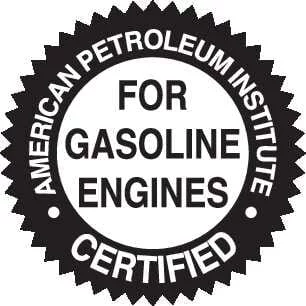
The official American Petroleum Institute (API) Certification Mark identifies engine oils that rigorously comply with the International Lubricant Specification Advisory Committee (ILSAC) performance standards. Ensure every motor oil bottle added to your Kia Sorento explicitly displays this API Starburst symbol on its container label. |
Vehicle Identification Number (VIN)
The Vehicle Identification Number (VIN) serves as the primary legal structural identifier for your Kia Sorento. You will need this unique 17-digit code for official vehicle registration, insurance policy issuing, title transfers, and ordering factory warranty service parts.

|
The primary chassis VIN is stamped directly into the floor pan structural crossmember located underneath the front passenger seat. Lift the protective plastic floor flap to expose the stamped chassis number.

|
Additionally, a secondary metal VIN plate is mounted atop the driver-side dashboard corner. The identification code is clearly visible from the outside of your Kia Sorento looking through the bottom corner of the front windshield.
 Gross vehicle weight. Tires and wheels
 Vehicle certification label. Tire specification and pressure label
See also:
Battery Cleaning
1.
Make sure the ignition switch and all accessories are in the OFF
position.
2.
Disconnect the battery cables (negative first).
...
Troubleshooting
...
Overhead Console Lamp Removal
1.
Disconnect the negative (-) battery terminal.
2.
Remove the mounting screws (2EA).
And then remove the overhead console (A).
...
Manuals list
- Kia Sorento MQ4 2021-2026 Owners Manual
- Kia Sorento XM 2011-2015 Owners Manual
- Kia Sorento XM 2011-2015 Service Manual
