
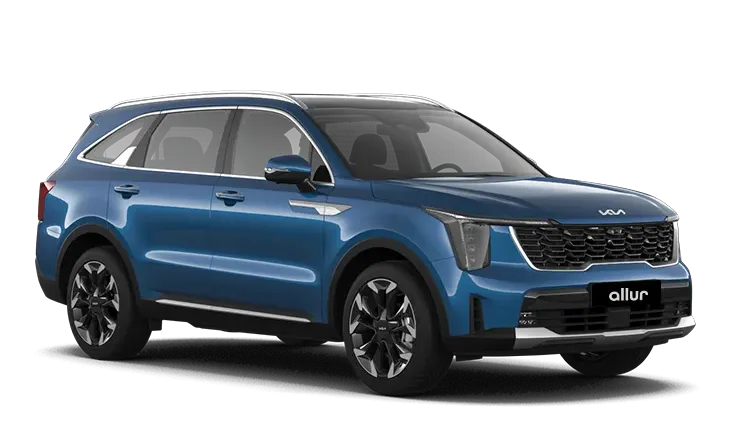
 Kia Sorento: Operating Door Locks with the Smart Key. Using the Mechanical Key Emergency Access
Operating Door Locks with the Smart Key
The keyless entry system in the Kia Sorento allows you to seamlessly lock or unlock all side doors and the rear liftgate without removing the transmitter from your pocket or bag. Additionally, this system enables keyless push-button engine starting. Detailed operational procedures and key proximity requirements are outlined below.
|
Locking Procedure
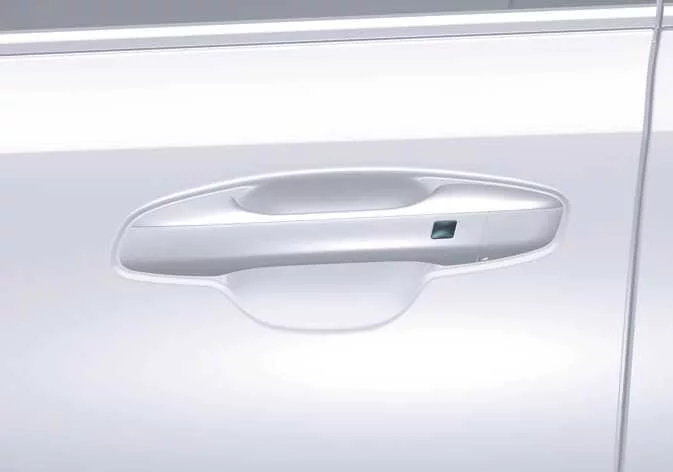
To secure your Kia Sorento from the outside, close all passenger doors securely. If any door is currently unlocked, press the request button located on the exterior front driver-side door handle once. Provided that all doors, the tailgate, and the engine hood are fully closed, the hazard warning lights will flash once to visually confirm that the central locking system is active and all doors are locked.
Unlocking Procedure
To unlock the vehicle, approach the driver's door with the key in your possession and press the driver-side door handle button once. The hazard warning lights will blink twice, confirming that the locking system has disengaged and all doors are unlocked and ready to open.
Essential Smart Key Usage Tips:
-
The exterior door handle button functions only when your Kia Sorento smart key is detected within a proximity distance of approximately 40 inches (1 meter) from the target handle.
-
If you attempt to lock your Kia Sorento using the exterior handle button, the locking sequence will fail and an audible warning chime will sound continuously for 3 seconds under any of the following conditions:
-
The smart key is left inside the interior cabin of the vehicle.
-
The ignition switch or ENGINE START/STOP button is in the ACC or ON state.
-
Any passenger door or hood remains open or ajar (excluding the liftgate).
As a built-in safety protection feature, if you unlock the doors using the handle button but do not physically open any passenger door within 30 seconds, the central locking mechanism will automatically relock all doors.
-
Using the Mechanical Key Emergency Access
In scenarios where the smart key battery is completely drained or electrical power is unavailable, the Kia Sorento provides a manual mechanical key option. This physical key blade is stored inside the smart key fob and allows direct manual control of the driver's door lock mechanism.
|
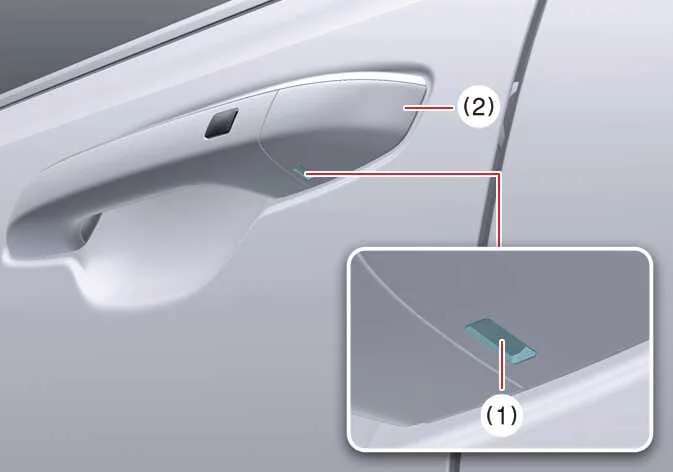
The physical mechanical key directly operates the lock cylinder located exclusively on the exterior driver's door handle of your Kia Sorento.
Step-by-Step Manual Key Lock Operation:
- Gently pull out and hold the driver's exterior door handle.
- Locate the hidden release lever (1) inside the lower cavity of the protective key cylinder cover (2), and compress it using the tip of your mechanical key blade or a small flat-head screwdriver.
- Carefully push outward to unclip and detach the protective handle cap while maintaining pressure on the release lever.
- Insert the key blade into the exposed lock cylinder. Turn the key toward the rear of the vehicle to unlock the
door, or turn it toward the front of the vehicle to engage the lock.
-
You can seamlessly transition back to electronic locking via the smart key once battery power is restored to your Kia Sorento.
-
After unlocking the mechanical cylinder, simply pull the exterior door handle outward to open the driver door.
-
When closing the door manually, push it firmly by hand to verify that the latch engages completely and securely.
Important Key Notes:
-
Remember that turning the mechanical key cylinder manually locks or unlocks only the driver's side door, not the entire vehicle simultaneously.
-
To lock all remaining doors without battery power, engage the master central door lock switch located inside the cabin while the driver door is open, exit the vehicle, and then mechanically lock the driver's door using the physical key.
-
Review the specific instructions for operating door locks from inside the cabin for complete interior locking procedures.
Protective Care & Handling Guidelines:
-
Handle the removable key cylinder cap carefully to avoid scratching the exterior body paintwork or losing the small plastic trim piece.
-
If ice freezes the door handle cap during winter weather, gently tap the surrounding trim or apply indirect warmth using your hands to thaw the mechanism without forcing it.
-
Avoid applying extreme force to the door handle assembly or key mechanism to prevent cosmetic and structural component damage.
System Operational Safeguards:
-
In freezing temperatures or harsh wet environments, moisture ingress may cause temporary freezing of the door latch and locking mechanisms in your Kia Sorento.
-
Rapidly toggling the door lock switches or key remote multiple times in quick succession may cause the electronic module to pause temporarily to prevent motor overheating and circuit damage.
Safety Cautions:
-
Always verify that all doors are fully closed and latched before driving your Kia Sorento. Driving with an unlatched door increases the risk of it opening unexpectedly while in motion.
-
Ensure all hands, clothing, and body parts are clear of the door frame when shutting doors to prevent severe pinch injuries.
CRITICAL WARNING:
Never lock children, vulnerable individuals, or pets inside a parked Kia Sorento during hot or extremely cold weather conditions. Trapped occupants face life-threatening risks from heatstroke, dehydration, or hypothermia.
Door Maintenance Reminder:
Do not slam or repeatedly force vehicle doors shut. Excessive impact can misalign door hinges, damage rubber weatherstripping seals, and ruin internal latch components.
Parking Security Protocols:
Whenever you leave your Kia Sorento parked unattended, ensure the ENGINE START/STOP button is switched to OFF, fully set the electronic parking brake, close all power windows, and lock every door.
-
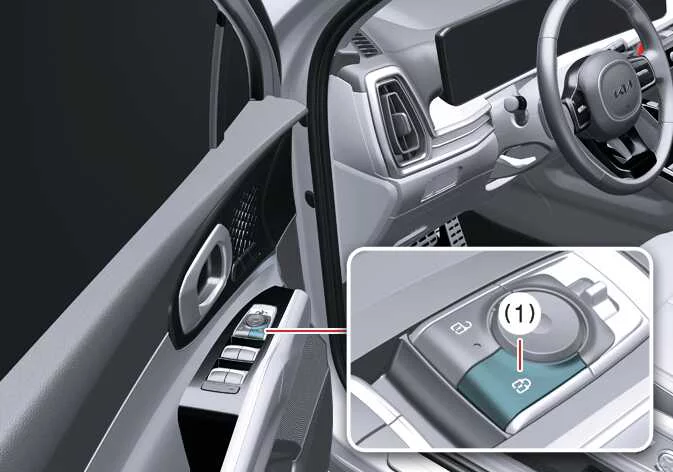
To lock all doors manually without using a key fob, press the interior central door lock switch (1) to the lock position while the ENGINE START/STOP button is OFF, then close the driver's door firmly from the outside.
-
Pressing the main central door lock button (1) commands the central system to simultaneously secure all side doors and the rear liftgate of your Kia Sorento.
Security Tip: Always double-check that all power windows are closed, the parking brake is firmly set, and all doors are locked before walking away from your vehicle.
-
 Door Locks and Security Systems in the Kia Sorento
 Operating Door Locks from Inside the Vehicle. Automated Door Lock and Unlock Features (If Equipped)
See also:
Rear View Monitor (RVM): (if equipped)
The Rear View Monitor (RVM) in your Kia Sorento provides a clear visual perspective of the area directly behind the
vehicle, enhancing precision and safety during parking maneuvers.
Detection ...
Brake Pedal Removal
1.
Turn ignition switch OFF and disconnect the negative (-) battery
cable.
2.
Remove the crash pad lower panel and reinforce panel.
...
Manuals list
- Kia Sorento MQ4 2021-2026 Owners Manual
- Kia Sorento XM 2011-2015 Owners Manual
- Kia Sorento XM 2011-2015 Service Manual
