
 Kia Sorento: Limitations of Rear Cross-Traffic Collision-Avoidance Assist
Under certain challenging driving environments or unique physical layouts, the Rear Cross-Traffic Collision-Avoidance Assist on your Kia Sorento may exhibit abnormal behavior or unexpected activations:
-
You are slowly reversing or departing from tight parking slots surrounded by dense, overgrown roadside foliage.
-
You are maneuvering out of wet, reflective areas or standing puddles of water.
-
An oncoming or crossing vehicle is approaching at an unusually high or exceptionally slow rate of speed.
Automated braking interventions may experience temporary limitations, requiring active driver vigilance and prompt manual control under the following harsh conditions:
-
Your Kia Sorento undergoes heavy structural vibration while driving across deeply rutted, bumpy roads, unpaved terrain, or severe potholes.
-
You are driving on slick, low-traction surfaces covered in thick snow, black ice, heavy rain, or sleet.
-
Tire pressure has dropped significantly below recommended levels, or a tire has suffered physical structural damage.
-
The Remote Smart Parking Assist system is currently engaged and actively maneuvering the vehicle (if equipped).
NOTE
For deeper technical details regarding the functionality and calibration limits of the rear corner radar units on your Kia Sorento, please review the Blind-Spot Collision-Avoidance Assist (BCA) section.
WARNING
-
You are driving near a vehicle or structure
-
Structure
Rear Cross-Traffic Collision-Avoidance Assist may face operating limitations when navigating close to solid walls or large stationary structures, occasionally failing to detect cars approaching from either side. The system might withhold warnings or delay automated brake deployment when critical.
Always maintain visual oversight and thoroughly check your surroundings while backing up your Kia Sorento.
-
-
The vehicle is in a complex parking environment
The system can mistakenly pick up adjacent vehicles actively parking, shuffling, or pulling out nearby, such as a car exiting right beside you, parking close behind, or turning sharply toward your travel path.
This complexity can cause your Kia Sorento to issue unnecessary warnings or trigger unexpected braking events.
Always maintain visual oversight and thoroughly check your surroundings while backing up your Kia Sorento.
-
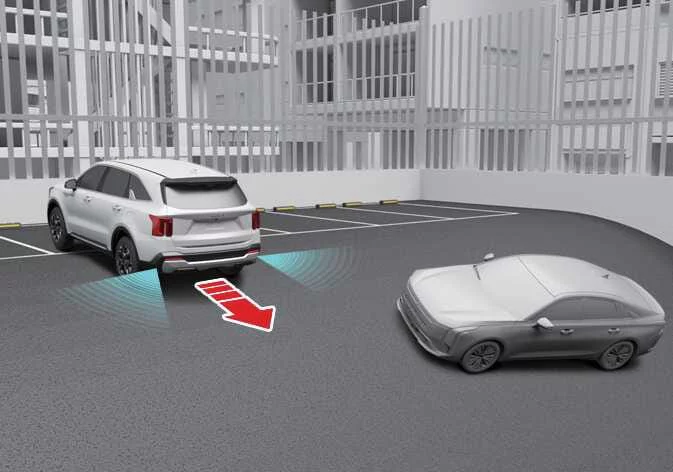
The vehicle is parked diagonally
Performance can become restricted when backing out of angled stalls, potentially causing the system to miss cross traffic moving in from the left or right, resulting in delayed alerts or lack of emergency braking assistance.
Always maintain visual oversight and thoroughly check your surroundings while backing up your Kia Sorento.
-
The vehicle is on or near a slope
Reversing on steep ramps, inclines, or declining driveway slopes can restrict radar angles on your Kia Sorento, preventing proper detection of cross-traffic and delaying critical chimes or brake control.
Always maintain visual oversight and thoroughly check your surroundings while backing up your Kia Sorento.
-
You are pulling into a parking space where there is a structure
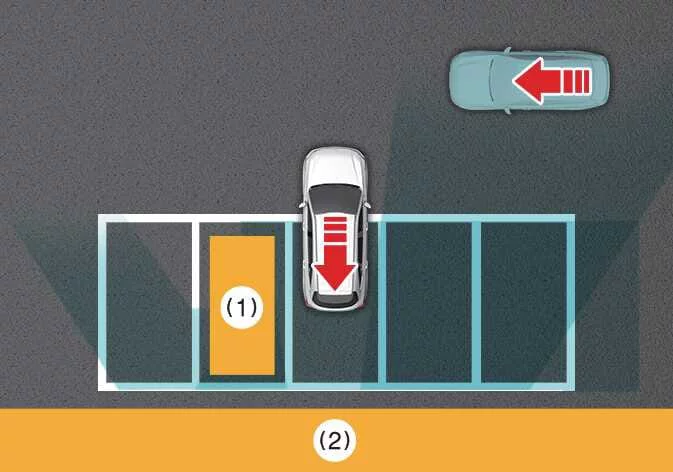
-
Structure
-
Wall
Backing tail-first into confined parking stalls bordered by concrete pillars or solid walls can trick the sensors into detecting traffic passing past your front or sides, triggering false warnings and unnecessary brake grabs.
Always maintain visual oversight and thoroughly check your surroundings while backing up your Kia Sorento.
-
-
The vehicle is parked backward
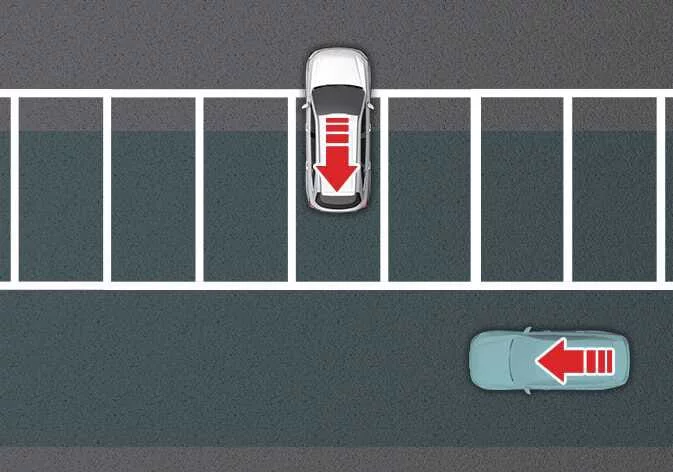
Reversing out after pulling in backward can cause the system to interpret regular aisle traffic as an immediate collision threat, leading to unnecessary warning chimes and sudden brake activation.
Always maintain visual oversight and thoroughly check your surroundings while backing up your Kia Sorento.
TIP
-
Always switch OFF the Rear Cross-Traffic Collision-Avoidance Assist system whenever you hitch a trailer or tow another vehicle behind your Kia Sorento to prevent erratic system behavior.
-
Severe electromagnetic interference from external transmission towers or power substations can disrupt sensor communication and degrade system accuracy.
-
The safety system requires up to 3 full seconds of active operation after you start your engine or reset the rear corner radars before it becomes fully active.
-
If you restart your vehicle while the bumper sensors remain blocked, iced over, or faulted, the system retains its previous configuration state and may continue displaying error alerts.
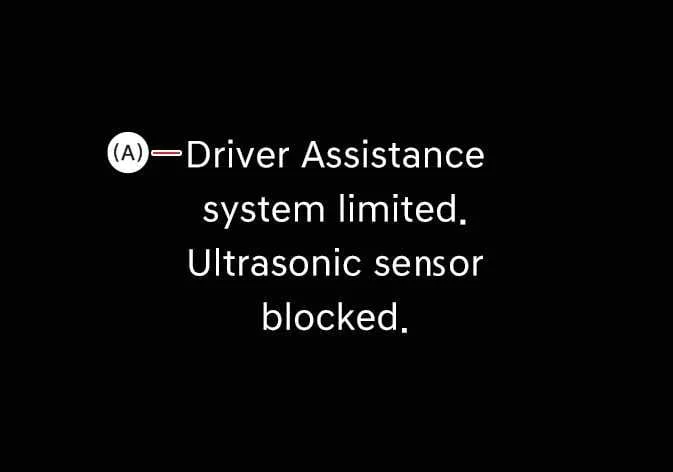
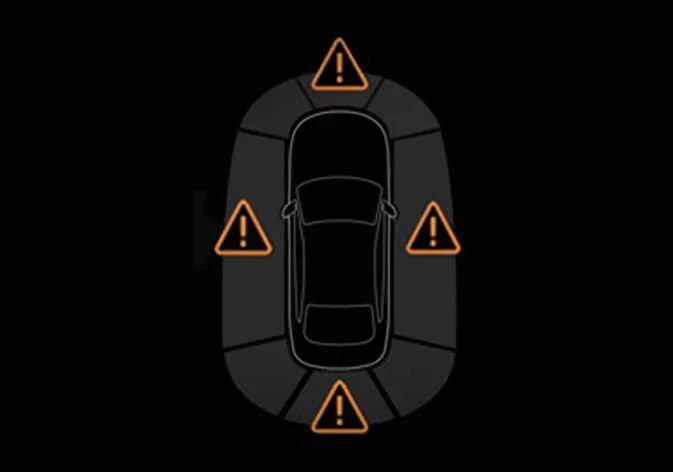
 Rear Cross-Traffic Collision-Avoidance Assist malfunction
(A) Check Driver Assistance system
...
 This device complies with Part 15 of the FCC rules.
Operation of this certified equipment within your Kia Sorento is strictly subject to the following two vital
conditions:
This electronic device must not generate any harmful elec ...
See also:
Console Replacement
Floor Console Assembly Replacement
•
Pry the trim off using a plastic trim tool and apply ...
Tire replacement
If the tire is worn evenly, a tread wear indicator will appear as a solid band
across the tread. This shows there is less than 1/16 inch (1.6 mm) of tread left
on the tire. Replace the tire when t ...
Direct Electro Hydraulic Actuator Coupling Components
1. Coupling assembly
2. Input shaft
3. Pressure sensor
4. Extension wiring
5. Oil hydraulic Motor(Actuator)
...