
 Kia Sorento: Liftgate
WARNING
Exhaust fumes hazard
Driving your Kia Sorento with the rear liftgate open or unlatched creates a negative pressure vortex that draws toxic engine exhaust gases directly into the passenger cabin. Breathing carbon monoxide and engine emissions causes severe physical injury, loss of consciousness, or fatal asphyxiation to vehicle occupants.
If an emergency requires driving with the tailgate raised, open all cabin air vents and roll down every side window completely to maintain a continuous inflow of fresh atmospheric air.
WARNING
Rear cargo area safety
Passengers must never occupy the rear cargo compartment while the vehicle is in motion. The cargo space lacks seat belts, airbag protection, or occupant restraints. In sudden stops or collisions, unrestrained passengers face high risk of severe physical impact and fatal injury.
Opening the liftgate
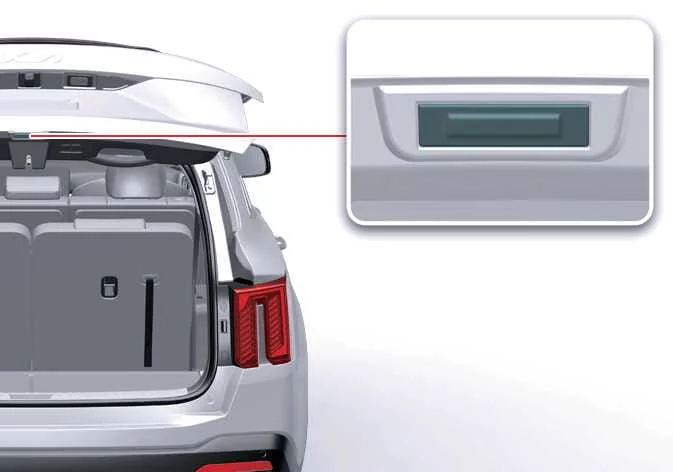
|
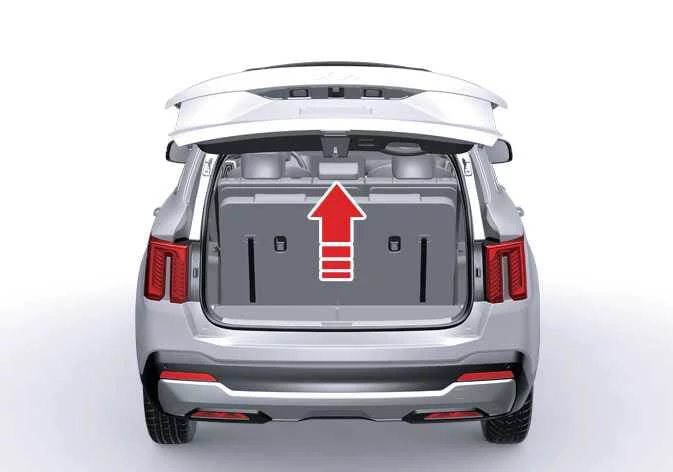
|
-
The rear liftgate locks or unlocks simultaneously whenever you lock or unlock all cabin doors using the smart key fob or the driver-side central door locking switch.
-
Pressing and holding the dedicated liftgate unlock button on your Kia Sorento smart key fob for approximately 1 second disarms and unlocks the rear tailgate mechanism exclusively.
-
When the liftgate mechanism is unlocked, squeeze the exterior switch handle mounted above the license plate and lift the tailgate upward to open.
-
Once you lower and slam the liftgate shut, the locking mechanism latches automatically, provided all passenger side doors remain locked.
NOTE
In sub-zero temperatures and severe freezing climates, moisture accumulation inside the latch linkage may freeze, temporarily preventing normal mechanical unlatching or electric lock actuator movement.
WARNING
The rear liftgate door swings rapidly upward and outward along a wide arc. Verify that children, bystanders, low garage ceilings, or external obstacles are safely clear of the rear bumper perimeter before activating the liftgate switch.
NOTE
Always confirm the tailgate is completely latched before putting your Kia Sorento in gear. Driving with an unlatched liftgate creates violent aerodynamic stress that can twist hinges, bend latch strikers, or permanently damage pneumatic gas lifter struts.
Closing the liftgate
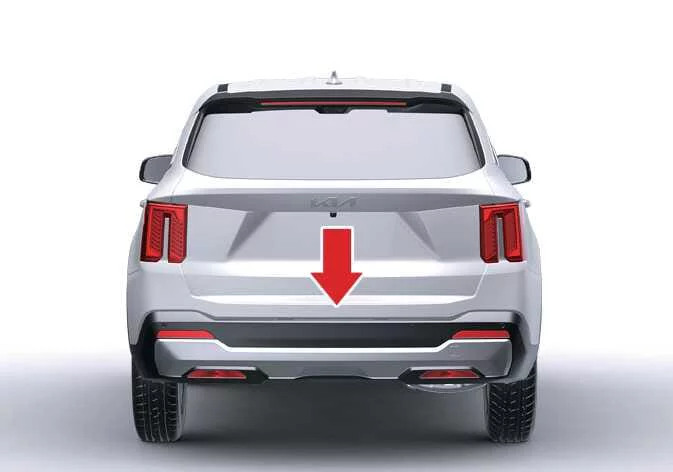
|
To close the rear door panel, grip the inner recessed handle, pull the liftgate downward, and press firmly against the bottom edge until the primary catch engages completely into the floor latch.
WARNING
Ensure that all hands, fingers, clothing, and limbs are pulled fully clear of the liftgate perimeter and closing frame before pulling the hatch down to prevent crushing injuries.
WARNING
Exhaust fumes safety
Never operate your Kia Sorento with the tailgate panel partially open or resting on the lower latch pin. Driving with an open hatch draws deadly carbon monoxide fumes into the interior cabin, creating extreme health risks or fatal toxicity for all passengers.
NOTE
To prevent mechanical damage to the closing mechanism, check that luggage straps, cargo nets, or stray objects are completely clear of the lower latch housing and floor striker loop before shutting the liftgate.
Emergency liftgate safety release
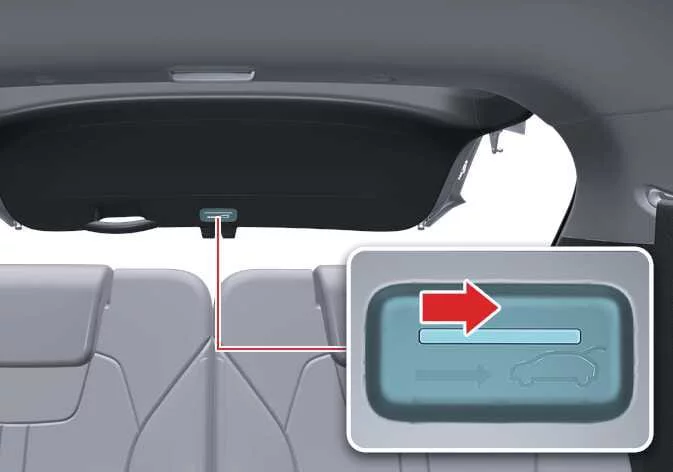
|
If electrical power fails or an emergency arises, passengers trapped inside the rear luggage area of the Kia Sorento can manually disengage the lock mechanism from within the vehicle by performing these steps:
- Insert a long, narrow metal tool (such as the mechanical key blade detached from your smart key fob) directly into the emergency access slot located near the bottom interior trim of the liftgate.
- Slide the internal mechanical lever firmly in the direction indicated by the engraved arrow to release the primary tailgate latch pin.
- Manually push the tailgate outward away from the body shell to create an escape opening.
WARNING
-
For personal safety in critical vehicle emergencies, make sure all family members and regular vehicle occupants are fully familiar with:
-
the exact location of the emergency liftgate manual release slot inside your Kia Sorento
-
the mechanical procedure for unlocking and pushing open the rear tailgate if accidentally enclosed within the luggage area
-
-
Never permit passengers or pets to sit or travel inside the rear cargo bay under any driving conditions. The trunk area is not designed for passenger transport and lacks collision protection structures.
-
Use the manual emergency hatch lever strictly in genuine panic situations. Exercise extreme caution when interacting with mechanical linkages while the vehicle is in motion.
-
 Digital Key 2 maintenance for a pre-owned vehicle. Limitations of the system
 Power liftgate: (if equipped)
See also:
Special Service Tools
Item
Illustration
Application
Fuel Pressure Gauge
(09353-24100)
Measuring the fuel line pressure
Fuel Pressure Gauge Adapter
...
Input Speed Sensor Circuit Diagram
...
Troubleshooting
Symption
Suspect area
Remedy
Engine misfire with abnormal internal lower engine noises.
Worn crankshaft bearings
Loose or out of specification engine flywhe ...
Manuals list
- Kia Sorento MQ4 2021-2026 Owners Manual
- Kia Sorento XM 2011-2015 Owners Manual
- Kia Sorento XM 2011-2015 Service Manual
